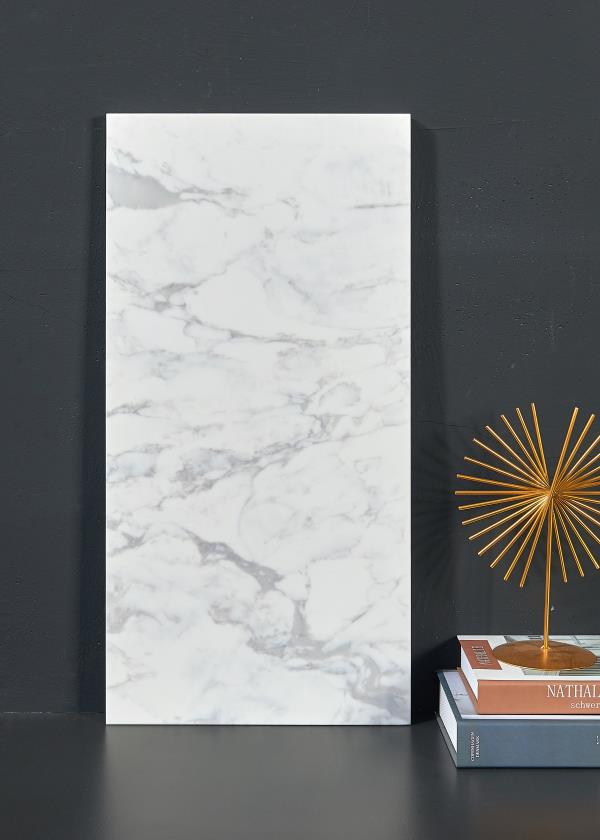
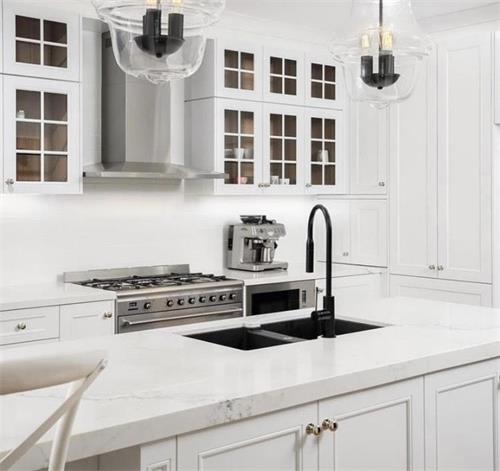
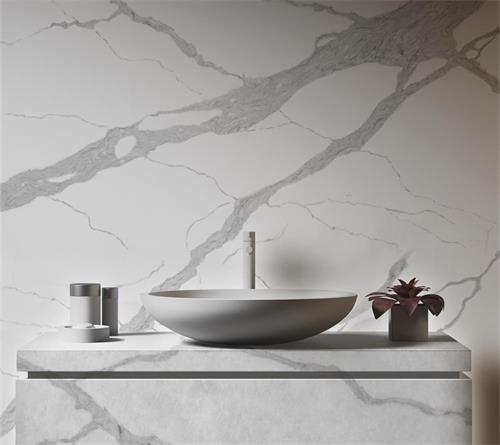
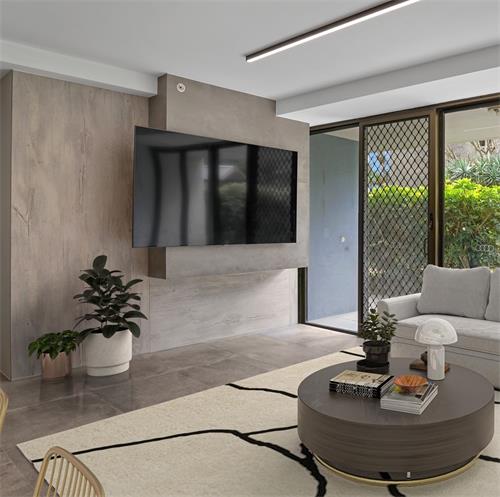
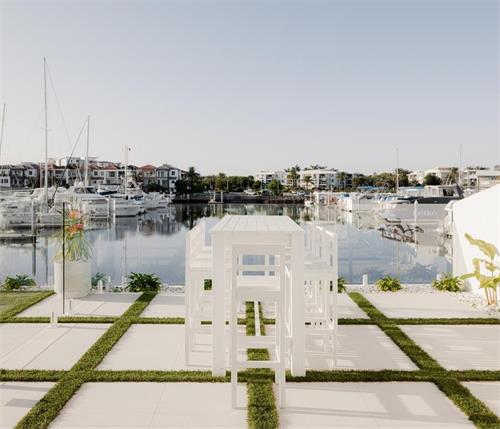
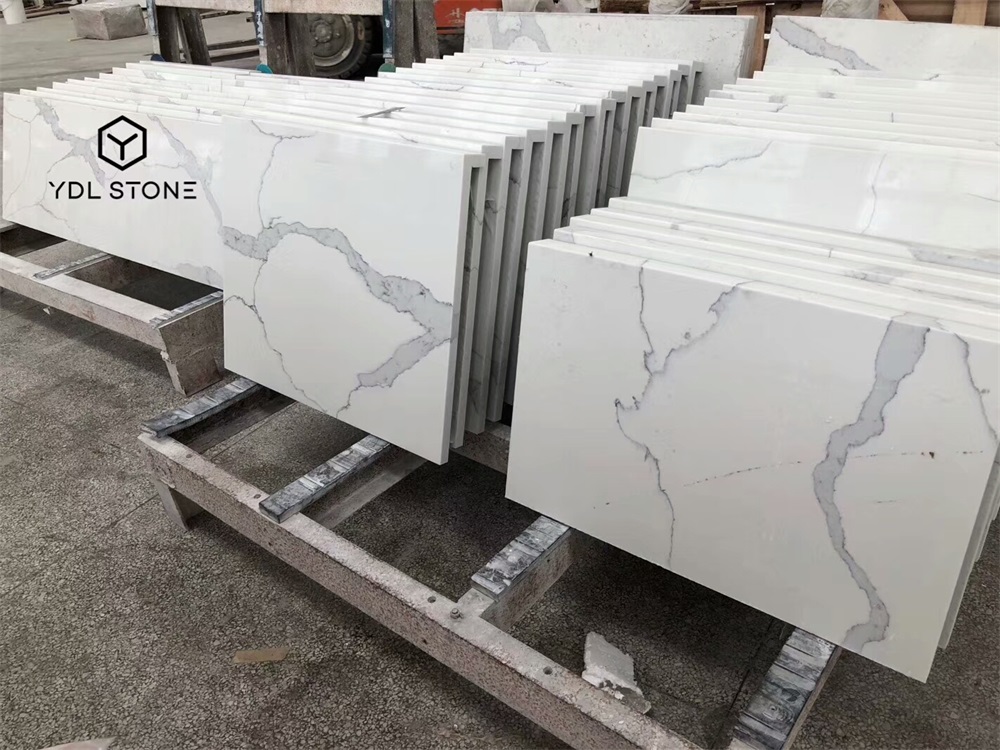









Engineered quartz has evolved far beyond the standard countertop. In 2026, designers and homeowners are using quartz slabs in increasingly creative ways — from waterfall islands that cascade to the floor, to full-height backsplashes that eliminate grout lines, to integrated sinks formed from the same material. This guide explores five popular applications defining contemporary kitchen design.
The waterfall edge is one of the most recognizable features of modern luxury kitchens. The countertop material continues vertically down the side of the island to the floor, creating a dramatic visual statement and emphasizing the stone's veining or pattern.
Visual continuity: The pattern flows uninterrupted from horizontal to vertical surface
Conceals cabinet ends: Hides cabinet construction while showcasing the stone
Adds perceived value: Signals premium construction quality
Defines zones: Visually separates the island from surrounding flooring
Slab selection: Choose patterns with directional veining for the most striking effect
Seam placement: Plan seams at corners or inconspicuous edges to maintain visual flow
Mitered joints: 45-degree miter joints at corners create clean transitions
Material thickness: 20mm or 30mm slabs produce the most substantial appearance
According to the National Kitchen and Bath Association 2026 design trends report, waterfall edges appear in approximately 35% of premium kitchen renovations, up from 18% in 2020.
Traditional tile backsplashes with grout lines are giving way to full-height quartz backsplashes using the same material as the countertop. The result is a seamless, easy-to-clean surface that extends from countertop to upper cabinets or ceiling.
No grout lines: Eliminates the cleaning and maintenance associated with tile grout
Visual cohesion: Creates a unified appearance with countertops
Easy cleaning: Wipe-clean non-porous surface
Modern aesthetic: Clean lines complement contemporary design
Light reflection: Polished quartz reflects light, brightening the kitchen
Behind ranges: Heat-resistant and easy to clean cooking splatter
Behind sinks: Waterproof surface with no grout to deteriorate
Coffee station backsplashes: Durable surface for daily use
Window surrounds: Frames kitchen windows with continuous material
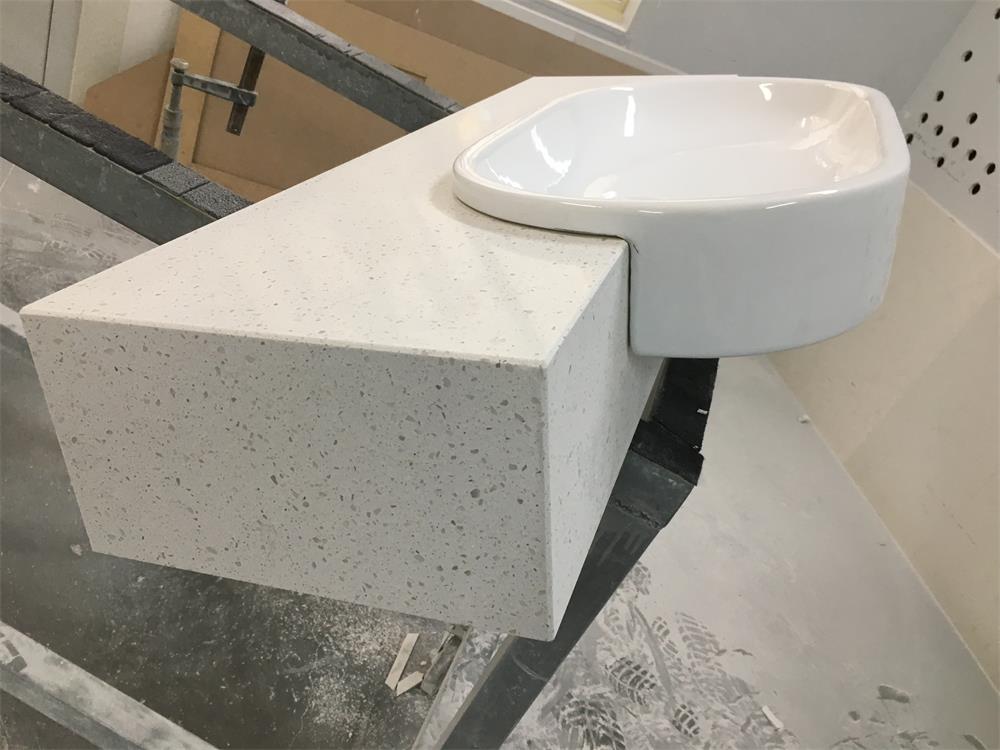
Integrated sinks fabricated from the same quartz material as the countertop create a seamless transition from counter to basin. The sink is CNC-machined and polished to match the surrounding surface perfectly.
Seamless appearance: No visible joint between counter and sink
Hygienic: No crevices where bacteria can accumulate
Customizable: Any size, shape, or configuration
Color matching: Perfect continuity with the countertop
Durability: Same material properties as the countertop
Undermount-style: Sink appears to drop below the countertop surface
Flush-mount: Sink edge is level with the countertop
Top-mount: Slight raised edge creates definition
Workstation sinks: Built-in ledges for cutting boards and accessories
The major consideration is fabrication complexity — integrated sinks require precise CNC machining and are typically fabricated by specialized stone fabricators rather than general contractors.
Engineered quartz makes an unexpected but stunning feature wall material, particularly in open-plan kitchens that flow into living areas. Quartz-clad walls can serve as kitchen backsplashes, dining room focal points, or room dividers between kitchen and living spaces.
Behind open shelving: Continuous surface highlights displayed items
Kitchen-living room dividers: Half-walls clad in quartz define spaces without closing them off
Dining room focal walls: Extends the kitchen material palette into adjacent spaces
Wine storage walls: Durable surface around built-in wine storage
Pantry interiors: Premium finish for butler's pantries and walk-in pantries
For vertical applications, lighter-weight 15mm slabs are often specified to reduce wall loading and simplify installation.
While less common than countertops, quartz flooring is gaining popularity in high-end kitchens and kitchen-living room combinations. The same slab material used on counters can extend to the floor for a fully integrated design.
Open-plan layouts: Continuous material unifies kitchen and living areas
Radiant heating compatibility: Quartz conducts heat efficiently from below
Heavy-use environments: Stain resistance and durability in busy kitchens
Aging-in-place design: Slip-resistant honed finishes improve safety
Slip resistance: Specify honed or textured finishes rather than polished for flooring
Subfloor preparation: Substrate must be perfectly level to prevent cracking
Movement joints: Required every 4–6 meters to accommodate thermal expansion
Installation expertise: Requires experienced stone tile installers
According to the Tile Council of North America, quartz tile flooring typically costs $15–$30 per square foot installed — more than ceramic tile but offering superior durability and design consistency.
For mild climate regions, engineered quartz can be used in covered outdoor kitchens, particularly when formulated with UV stabilizers. However, most quartz products are designed for indoor use, and natural granite is often preferred for full outdoor exposure.
If specifying quartz for outdoor applications:
1. Verify the manufacturer offers UV-stabilized formulations 2. Confirm warranty covers exterior installations 3. Specify covered installations only (no direct weather exposure) 4. Use lighter colors that absorb less heat
| Application | Best for | Key consideration |
|---|---|---|
| Waterfall island | Open-plan kitchens, modern design | Slab selection, miter quality |
| Full-height backsplash | Contemporary kitchens | Material quantity, seam placement |
| Integrated sink | Custom new builds | Fabrication expertise, CNC capability |
| Feature wall | Open-plan layouts | Wall loading, structural support |
| Flooring | Large kitchens, open layouts | Slip resistance, subfloor prep |
When using quartz across multiple surfaces in the same kitchen, consider:
Perfect match: Same color and lot for uniform appearance
Intentional contrast: Different but complementary colors for visual interest
Book-matched veining: For waterfall edges where vein pattern wraps the corner
Directional consistency: Ensure vein patterns flow logically across surfaces
Most fabricators recommend ordering all slabs for a project at the same time to ensure color and pattern consistency, particularly when using vein patterns.
Application complexity significantly affects installation costs:
| Application | Relative cost | Why |
|---|---|---|
| Standard countertop | Baseline | Standard fabrication |
| Waterfall edge | +20–30% | Additional cuts, mitered joints, more material |
| Full-height backsplash | +15–25% | More material, precise cutting |
| Integrated sink | +30–50% | CNC fabrication, specialized tooling |
| Feature wall | +10–20% | Vertical mounting, additional labor |
| Flooring | Varies | Installation method, substrate prep |
Can any quartz slab be used for waterfall edges? Technically yes, but vein patterns with clear directional flow produce the most striking results.
Are integrated sinks more hygienic than drop-in sinks? Yes. Without seams or crevices between sink and counter, integrated sinks eliminate areas where bacteria can accumulate.
Can engineered quartz be used for kitchen flooring? Yes, with proper subfloor preparation and honed or textured finishes for slip resistance.
How thick should waterfall edge slabs be? 20mm or 30mm slabs are standard. Thinner slabs require substrate support for vertical sections.
What is the most popular quartz application in 2026? Waterfall islands and full-height backsplashes are the two fastest-growing applications, according to recent Houzz design trend data.
For designers, contractors, and homeowners exploring quartz applications beyond standard countertops, YDL Stone provides project consultation, slab selection guidance, and fabrication coordination through its network of certified fabricators.
Contact our design team to discuss your project specifications and explore application options.