








Travertine and engineered quartz sit at opposite ends of the stone spectrum: one is a natural sedimentary rock formed by mineral springs, the other a manufactured surface of ground quartz and resin. Both are popular with importers, designers, and contractors, but they behave very differently in daily use. Understanding those differences helps you specify the right material for kitchens, bathrooms, hotels, and outdoor projects.
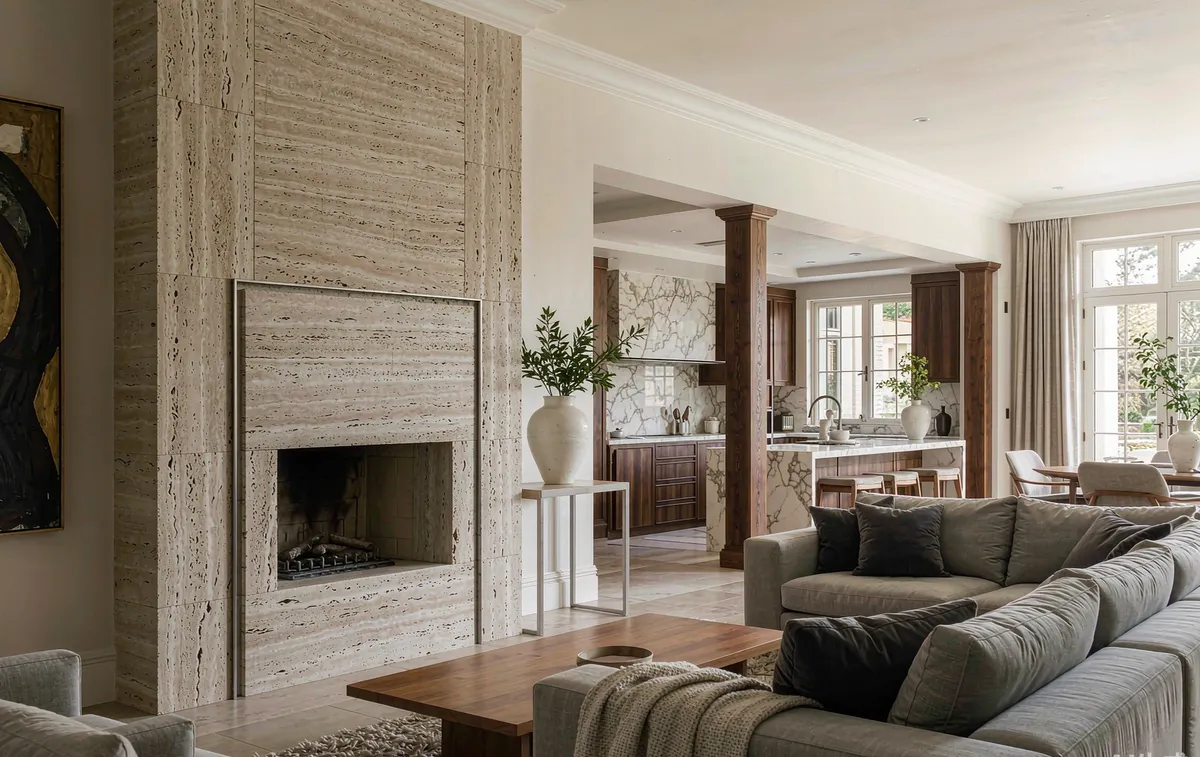
Travertine is a form of limestone deposited around mineral springs. Its characteristic linear pores and fibrous veining give it a warm, earthy appearance that has been used in architecture for thousands of years, from Roman aqueducts to modern hotel facades.
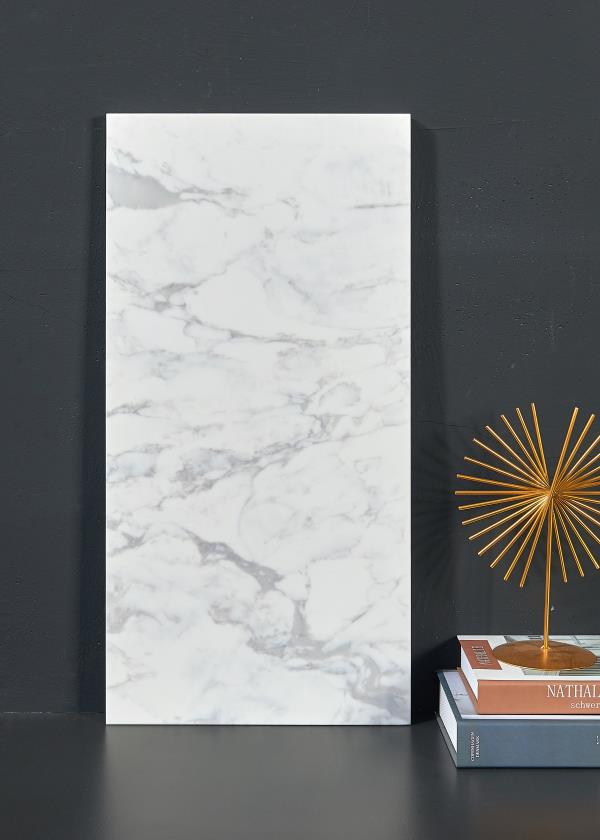
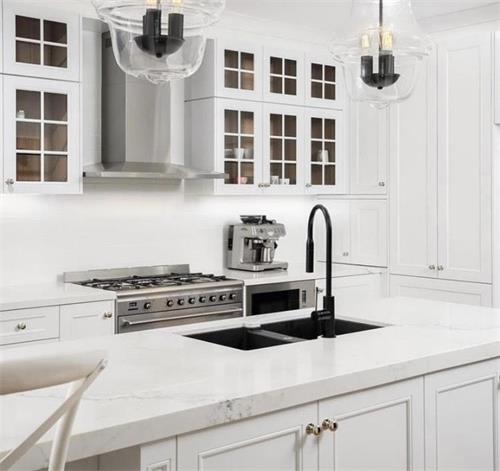
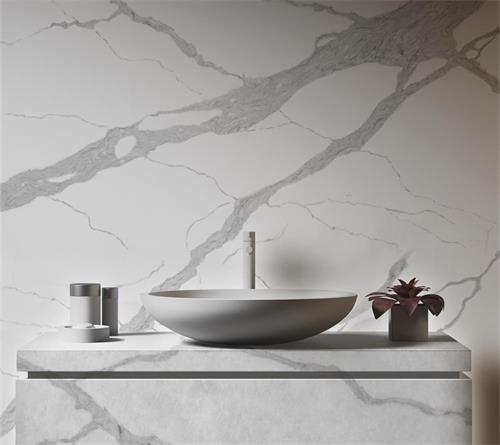
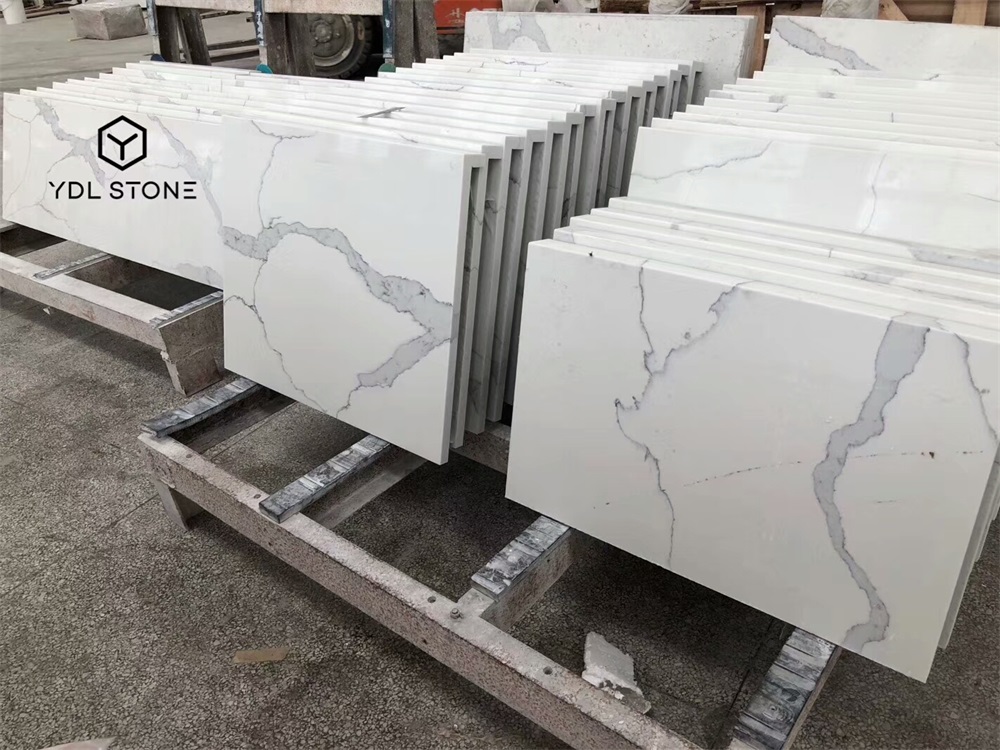
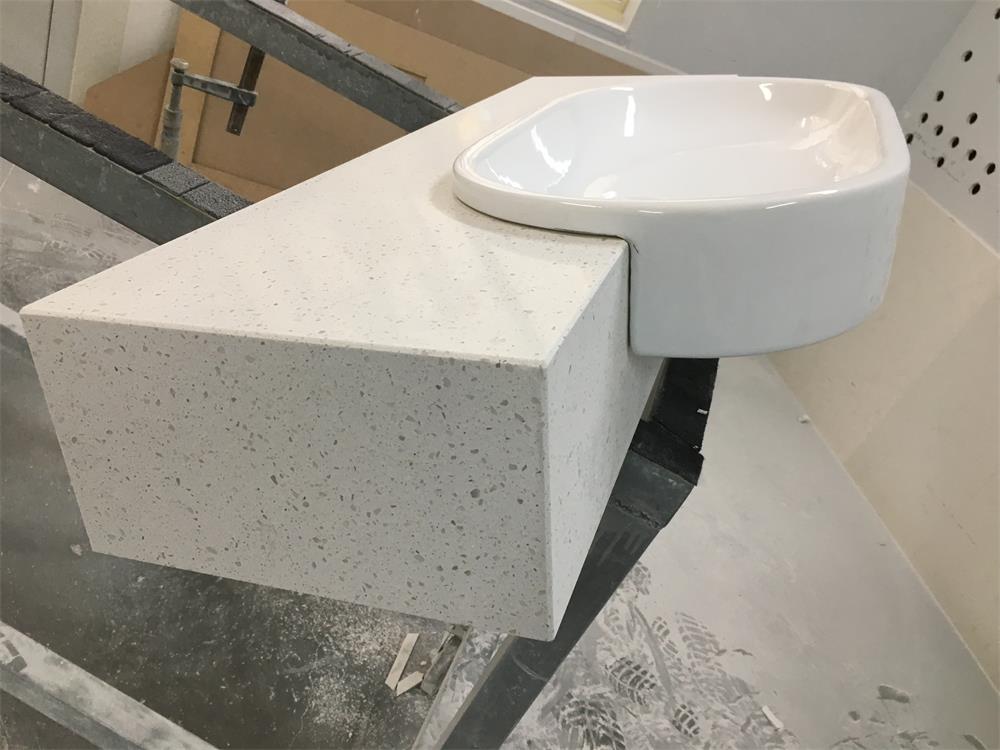
Quartz slabs combine roughly 90-93% ground natural quartz with polymer resins and pigments, vacuum-pressed into dense, non-porous slabs.
| Property | Travertine | Engineered Quartz |
|---|---|---|
| Porosity | High (needs sealing) | Non-porous |
| Scratch resistance | Moderate | High |
| Heat resistance | Good | Moderate (resin can scorch) |
| Stain resistance | Needs prompt cleanup | Excellent |
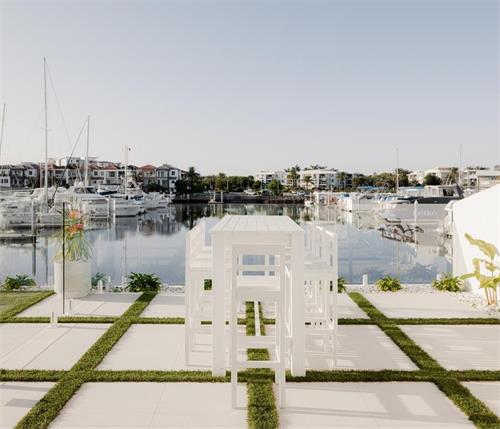
| Outdoor use | Excellent | Limited (UV can fade resin) |
Travertine's main weakness is its porosity. Unsealed or poorly sealed travertine absorbs liquids, which leads to staining and etching from acidic spills like wine or citrus. Quartz's resin content makes it naturally resistant to stains, but that same resin limits heat tolerance and outdoor durability.
Travertine needs a penetrating sealer applied at installation and reapplied every one to two years depending on traffic. Clean with pH-neutral stone cleaner; avoid vinegar, bleach, and abrasive pads.
Quartz needs only mild soap and water. Avoid harsh chemicals, and always use trivets under hot pans, because sudden heat can damage the resin bond.
Mid-range travertine is often less expensive per square meter than premium quartz, but factoring in sealing, maintenance, and higher fabrication waste can narrow the gap. Premium filled and honed travertine for hotel projects can exceed the price of mid-grade quartz. Ask your supplier for landed-cost comparisons including waste factors, not just slab prices.
Is travertine slippery around pools? Tumbled or brushed unfilled travertine provides good grip, which is why it remains a favorite for pool decks.
Can quartz be used outdoors? Standard quartz is not recommended for prolonged UV exposure; resins can discolor. Some outdoor-specific quartz lines exist, but natural stone is usually the safer exterior choice.
Does travertine staining ruin the stone permanently? Most stains can be lifted with a poultice if treated promptly. Sealing dramatically reduces risk.
Which material adds more resale value? Both are marketable. Quartz signals low maintenance to buyers; authentic travertine signals premium natural character.
YDL Stone supplies travertine blocks and slabs alongside full quartz color lines for hotel, residential, and commercial projects. Contact our team for slab availability, project quotations, and material recommendations based on your application.