
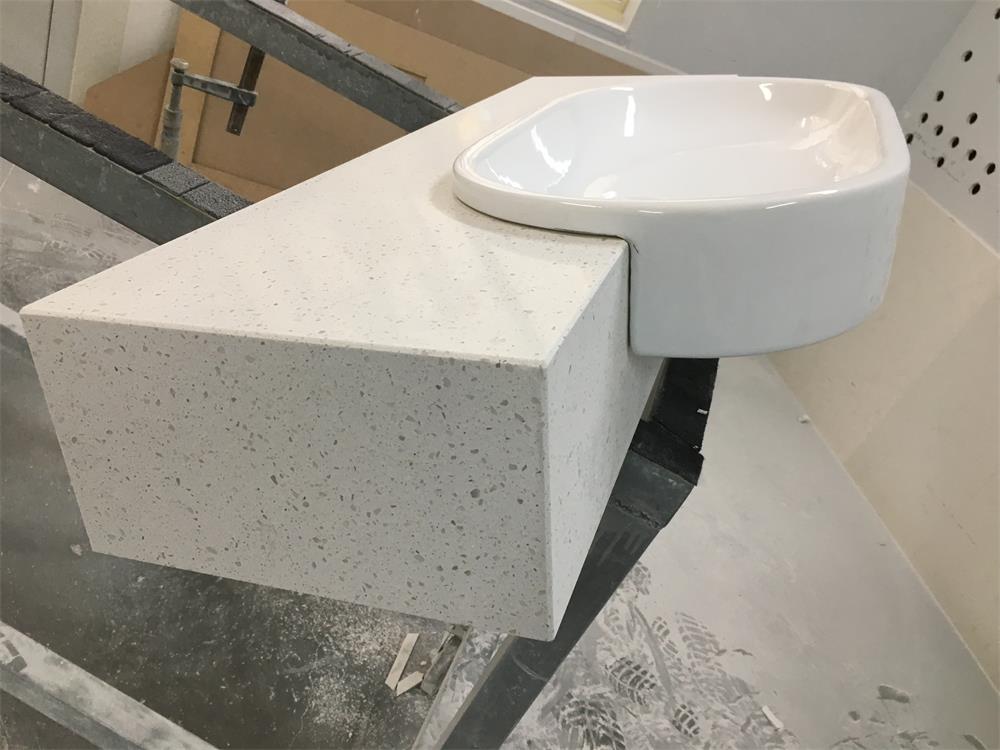
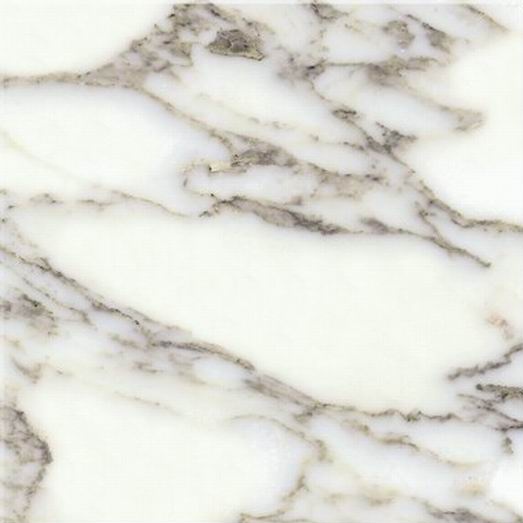
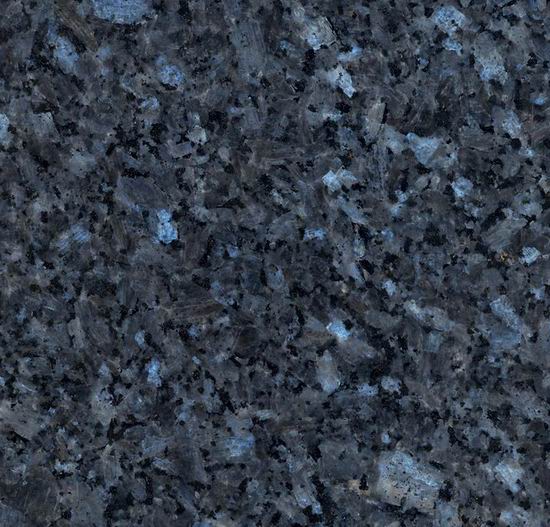
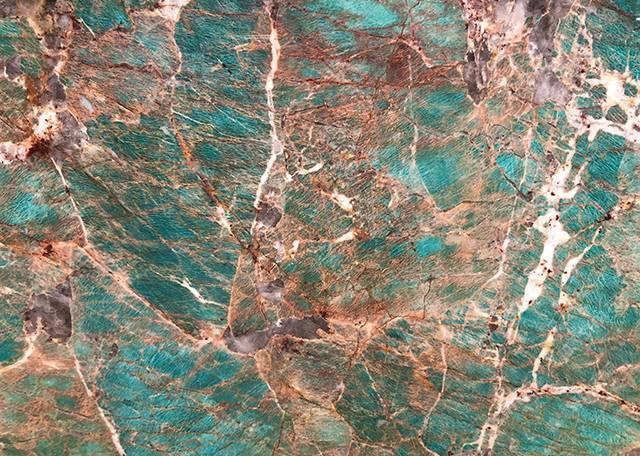









Selecting a quartz countertop color is one of the most visible decisions in any kitchen or bathroom renovation. The right color anchors the entire design, complements cabinetry and flooring, and affects resale appeal. With engineered quartz available in hundreds of patterns — from pure solids to dramatic marble looks — making the right choice requires considering light, lifestyle, and long-term flexibility.
Before browsing color samples, evaluate how natural and artificial light interact with your space:
North-facing rooms: Cooler light tends to make whites appear bluer and greys appear darker. Warm-toned quartz (creams, beiges) can balance the cool light.
South-facing rooms: Strong direct sunlight reveals subtle patterns and undertones. Neutral whites and greys work well without competing with light.
East/west-facing rooms: Light varies dramatically through the day. Mid-tone quartz colors (taupe, warm grey) hide daily variation better than stark whites.
Low-light rooms: Lighter quartz colors (white, cream, light grey) reflect available light and make spaces feel larger.
A common mistake is selecting a color from a small showroom sample under fluorescent light, then finding it appears completely different once installed. Always evaluate large samples in your actual space under typical lighting conditions.
Engineered quartz typically falls into three visual categories:
Solid, uniform color throughout the slab — white, cream, grey, black, beige, brown. Best for:
Minimalist and contemporary designs
Commercial projects requiring consistency across multiple slabs
High-contrast kitchens with bold cabinetry
Modern Scandinavian aesthetics
Two-tone patterns with subtle contrast — soft veining, tonal shifts, layered neutrals. Best for:
Transitional kitchens bridging traditional and modern
Homeowners wanting visual interest without dramatic veining
Projects where subtle movement adds depth
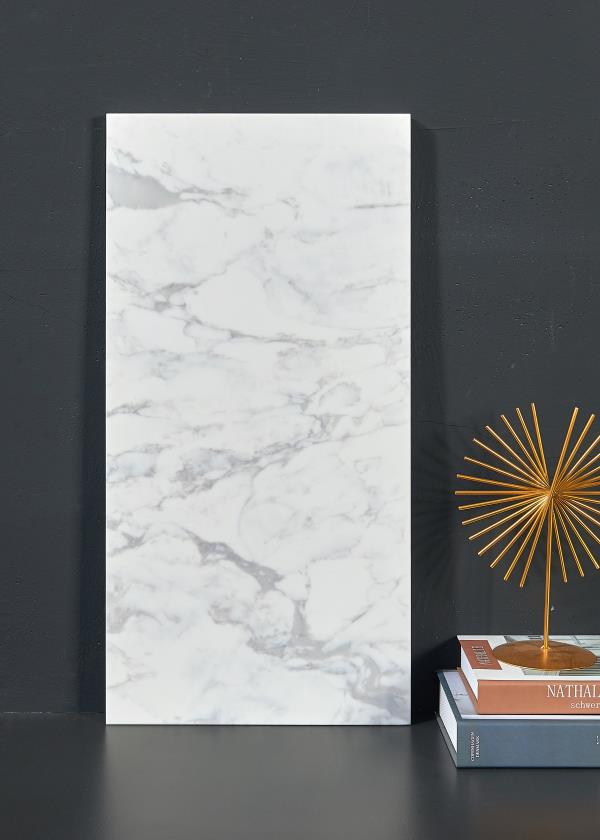
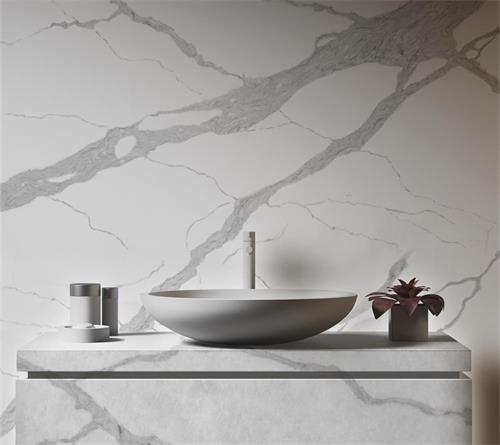
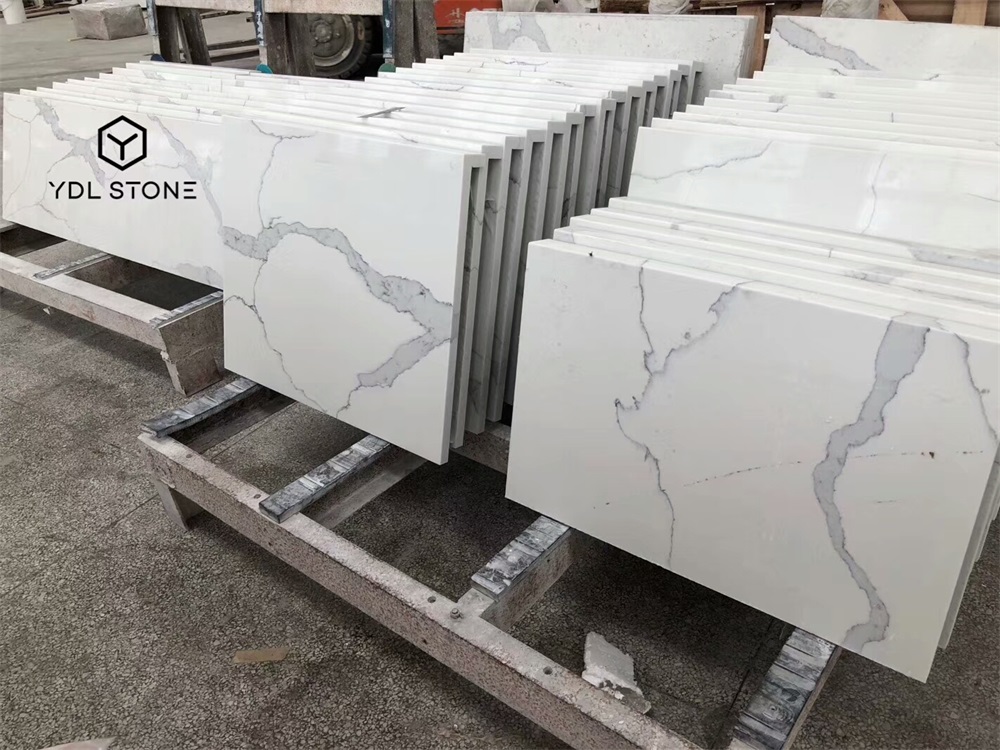
Distinct veining patterns mimicking marble — from delicate hairline veins to bold dramatic sweeps. Best for:
Luxury kitchens replicating Calacatta or Carrara marble aesthetics
Feature islands where the pattern becomes a focal point
Book-matched installations for symmetrical veining
| Cabinet color | Recommended quartz colors |
|---|---|
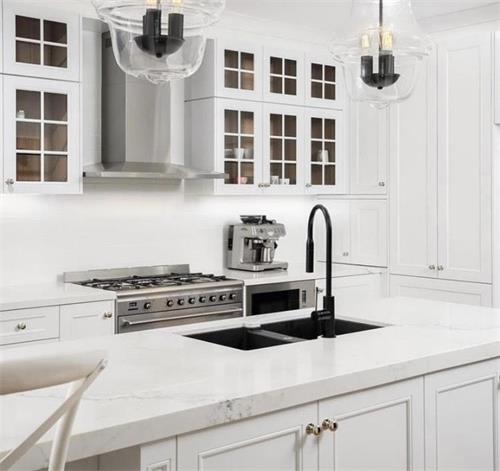
| White cabinets | Grey veining, soft beige, marble-look white with subtle veins |
| Wood / oak cabinets | Cream, warm beige, soft taupe, light grey |
| Grey cabinets | White with grey veining, charcoal, contrasting pure white |
| Navy / dark blue cabinets | Warm white, cream, gold-veined marble-look |
| Black cabinets | Bright white, dramatic veining, polished light grey |
| Two-tone cabinets | Neutral quartz (warm grey, beige) to bridge the palette |
According to the National Kitchen and Bath Association, contrasting countertop and cabinet colors have been the dominant design trend since 2020, replacing the all-white kitchen aesthetic of the 2010s.
Color choice affects visible maintenance:
White and light colors: Show dust, crumbs, and water spots more readily. Ideal for showpiece kitchens with regular cleaning habits.
Mid-tone colors (warm grey, taupe, beige): Most forgiving for daily use — hide crumbs, smudges, and minor wear.
Dark colors (black, charcoal, deep brown): Show dust, fingerprints, and water spots prominently. Require frequent wiping but hide discoloration over time.
Heavy veining patterns: Camouflage minor stains and crumbs better than solid colors.
For busy family kitchens, mid-tone dual color or subtle vein patterns typically balance aesthetics with practical maintenance.
Quartz countertops generally support resale value, but specific color choices affect buyer appeal:
Safe choices for resale: White, light grey, soft beige, marble-look patterns with subtle veining
Riskier choices for resale: Bold colors (red, blue, green), extreme dark colors, very busy patterns
Neutral recommendations: Calacatta-look white with grey veining, warm grey dual color, soft cream tones
If you plan to sell within 5 years, selecting a broadly appealing neutral protects your renovation investment.
Digital images and small samples distort quartz appearance. Before finalizing:
1. Request full-size samples: Many suppliers ship 100×100mm or larger pieces for accurate evaluation. 2. Visit a showroom: Suppliers with showroom facilities allow you to view full slabs under various lighting. 3. Check multiple slabs: If your project requires multiple slabs, evaluate them together to confirm color consistency. 4. Ask for book-matching: For vein patterns, book-matched installations create symmetrical mirror images ideal for feature walls or large islands.
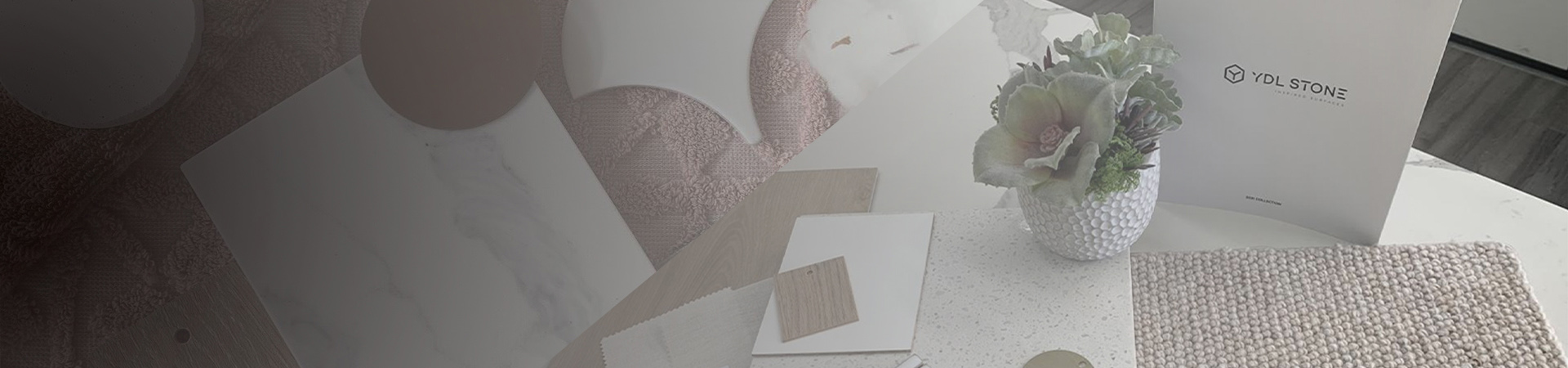
YDL Stone offers sample packs covering single color, dual color, thin vein, thick vein, and special series — designed to help buyers evaluate the full color range before specification.
Quartz countertops rarely exist in isolation. Consider the full material palette:
Matching backsplash: Same quartz as the countertop creates a seamless, modern look
Contrasting backsplash: Tile, natural stone, or contrasting quartz adds visual interest
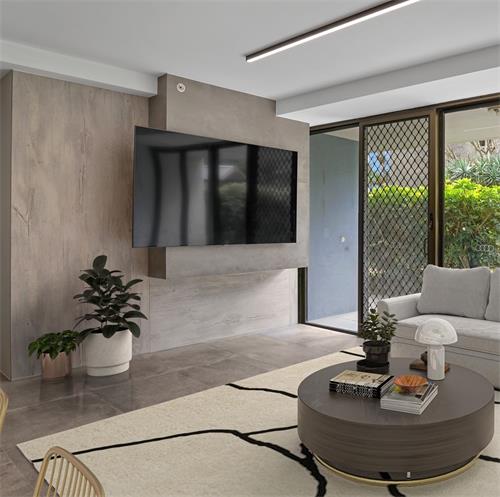
Flooring continuity: Light floors allow bolder countertop choices; dark floors favor lighter countertops
Metal accents: Brass and gold hardware complement warm-toned quartz; chrome and stainless complement cool tones
A cohesive material palette — typically three main colors plus metal accents — produces the most enduring design.
1. Choosing the lightest or darkest sample: Mid-range colors often photograph and live with better 2. Selecting based on showroom lighting alone: Test in your space's actual lighting 3. Ignoring veining direction: Vein patterns should flow consistently with the kitchen layout 4. Forgetting edge profiles: The edge profile can make a subtle color look dramatically different 5. Not ordering enough material: Always include 10% overage for cuts and future repairs
What color quartz is most popular in 2026? White with subtle grey veining (Calacatta-look) and warm grey dual colors remain dominant globally, according to Houzz kitchen trend reports.
Can I change my quartz color after installation? Quartz countertops cannot be refinished or recolored. Replacement is the only option, so choose carefully upfront.
How do I coordinate quartz with appliances? Stainless steel appliances work with any quartz color. Colored appliances (matte black, white) favor neutral quartz tones.
Should I match my countertop and backsplash? Matching creates a seamless modern look; contrasting adds visual interest. Both work — the choice depends on whether you want the countertop as focal point or background.
What if I can't decide between two colors? Request samples of both, leave them in your kitchen for a week under different lighting conditions, and choose the one you stop noticing.
Choosing the right quartz color is easier with physical samples evaluated in your actual space. YDL Stone provides sample packs covering single color, dual color, thin vein, thick vein, and special series engineered quartz, shipped from Xiamen, China or the Melbourne, Australia warehouse for ANZ clients.
Request a sample pack or contact our design team for project-specific color recommendations.