










Indoor air quality is increasingly central to building material specification, particularly for schools, healthcare facilities, and residential projects. GREENGUARD Gold certification — administered by UL Solutions under standard UL 2818 — provides independent verification that stone surfaces meet stringent chemical emission limits. This guide explains what the certification covers and why it matters for health-conscious projects.
GREENGUARD Gold is a third-party certification program that tests products for emissions of volatile organic compounds (VOCs) and other harmful chemicals. The "Gold" tier applies stricter limits than the standard GREENGUARD certification, making it suitable for sensitive environments like schools, daycare facilities, and healthcare settings.
The certification is administered by UL Solutions under UL 2818, the standard for chemical emissions from building materials. Products that pass testing receive certification valid for one year, with annual renewal required through re-testing.
GREENGUARD Gold testing evaluates a product's emissions over multiple exposure scenarios:
| Pollutant category | Examples tested |
|---|---|
| Volatile organic compounds (VOCs) | Formaldehyde, benzene, toluene, xylene |
| Semi-volatile organic compounds (SVOCs) | Phthalates, flame retardants |
| Aldehydes | Formaldehyde, acetaldehyde |
| Heavy metals | Lead, mercury, cadmium (in particulates) |
| Particulate emissions | Fine particles released from the material |
Testing is conducted in environmental chambers that simulate indoor conditions, with measurements taken at 24 hours and 168 hours (7 days) after material installation. The 7-day measurement is the more stringent standard, reflecting long-term indoor exposure.
Stone surfaces are a focal point of concern for indoor air quality for several reasons:
Large surface area: Countertops, wall cladding, and flooring cover significant square footage in a room
Prolonged exposure: Unlike paint or furniture, stone surfaces remain in place for decades
Food contact areas: Kitchen countertops are in close proximity to food preparation
Heat exposure: Cooking and bathroom heating can accelerate emissions from certain materials
A U.S. EPA study found that indoor VOC concentrations are typically 2–5 times higher than outdoor levels, making material selection critical for indoor environments where people spend most of their time.
Both certifications exist, with different thresholds:
| Standard | VOC limit (µg/m³) | Target environments |
|---|---|---|
| GREENGUARD | ≤ 500 µg/m³ total VOCs | General commercial, residential |
| GREENGUARD Gold | ≤ 220 µg/m³ total VOCs | Schools, healthcare, childcare |
GREENGUARD Gold's stricter limits align with standards from the Collaborative for High Performance Schools (CHPS) and Practice Greenhealth for healthcare facility construction.
The certification is commonly required or preferred in:
Educational facilities: K-12 schools, universities, daycare centers
Healthcare: Hospitals, clinics, dental offices, long-term care
Government buildings: Courthouses, municipal offices
Premium residential: High-end custom homes, LEED-certified projects
Hospitality: Boutique hotels, wellness-focused resorts
Commercial offices: LEED Platinum projects, tech company campuses
For projects targeting LEED v4.1 certification, USGBC recognizes GREENGUARD Gold products for several credits related to indoor environmental quality.
Buyer verification steps:
1. Search the UL SPOT database: The UL SPOT product database lists all currently certified products with certificate numbers and validity dates. 2. Check the certificate scope: Confirm the specific product line and color is covered. 3. Verify renewal date: GREENGUARD Gold certificates expire after one year and require annual renewal. 4. Request the test summary: Reputable suppliers provide test summaries showing actual measured emission levels.
For engineered quartz products, GREENGUARD Gold certification addresses concerns about resin-based emissions:
Formaldehyde emissions: Resins used in quartz manufacturing historically contained formaldehyde; modern formulations use low-formaldehyde or formaldehyde-free resins.
Styrene emissions: Some polyester resins release styrene, a possible carcinogen; GREENGUARD Gold testing confirms emissions stay below health-based thresholds.
Long-term off-gassing: Stone surfaces have very low emissions after the initial curing period (typically 7-30 days post-manufacture), making them among the safest material categories for indoor use.
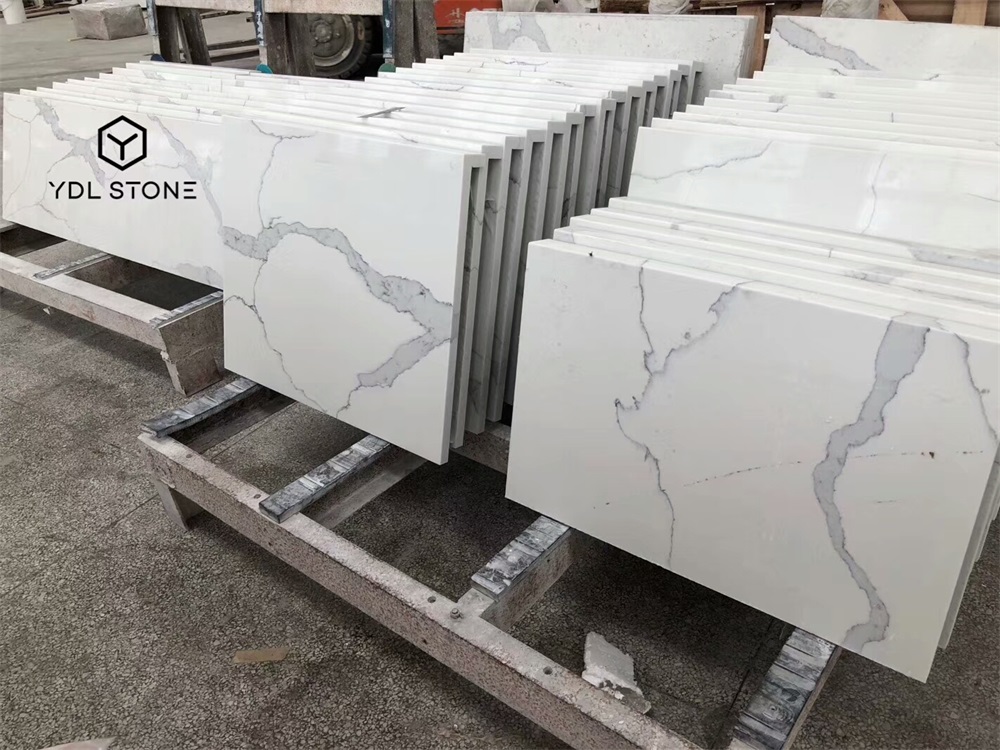
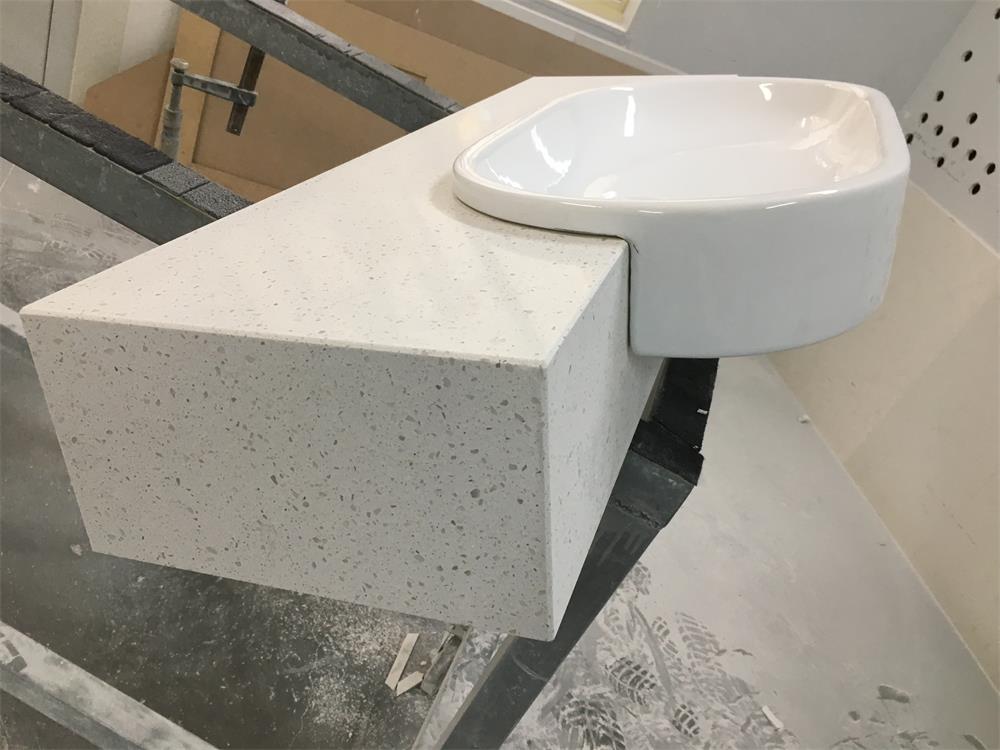
YDL Stone's engineered quartz slabs are GREENGUARD Gold certified, with formulations optimized to minimize resin-related emissions while maintaining durability and food safety certifications.
For maximum indoor air quality assurance, GREENGUARD Gold is often paired with:
NSF/ANSI 51: Food contact safety (kitchen applications)
ISO 9001:2015: Manufacturing quality consistency
LEED v4.1 credits: Indoor environmental quality category
WELL Building Standard: Material transparency requirements
These combined certifications are particularly important for projects pursuing both LEED and WELL certification, where material transparency and verified emissions data are mandatory.
"Natural stone is automatically safe." Not necessarily. Natural stone may contain trace radioactive elements (granite) or mineral dust. Certification provides verification beyond natural origin.
"All engineered quartz is low emission." Formulations vary. Only GREENGUARD Gold certified products have been independently verified for emission levels.
"A product labeled 'eco-friendly' is certified." "Eco-friendly" is a marketing term with no standardized definition. GREENGUARD Gold provides independent third-party verification with specific emission thresholds.
"Once certified, always certified." No. GREENGUARD Gold certification requires annual renewal. Always check current certificate status, not just historical claims.
When writing specifications, include:
``` INDOOR AIR QUALITY REQUIREMENTS:
GREENGUARD Gold certification per UL 2818 — certificate number required
Total VOC emissions ≤ 220 µg/m³
Formaldehyde emissions ≤ 9 µg/m³ (Gold threshold)
Annual certification renewal verification by specifier
Test summary documentation provided with shipment
```
This language protects the project from substitutions of non-certified materials.
Is GREENGUARD Gold required by law? No, but it is increasingly required by building codes for schools and healthcare facilities in some U.S. states and Canadian provinces.
How long does GREENGUARD Gold certification last? One year, with annual renewal required through re-testing.
Does natural stone need GREENGUARD certification? Natural stone has very low emissions, but GREENGUARD Gold certification is still valuable as third-party verification for projects requiring documented compliance.
Is GREENGUARD Gold accepted outside North America? Yes. The certification is referenced in green building standards worldwide, including BREEAM (UK) and Green Star (Australia).
Can a stone product be both NSF/ANSI 51 and GREENGUARD Gold? Yes. These certifications address different concerns (food safety vs indoor air quality) and can be obtained separately for the same product.
For projects requiring GREENGUARD Gold certified stone surfaces, YDL Stone provides complete certification documentation including current certificates, test summaries, and material safety data sheets (MSDS) for all certified engineered quartz product lines.
Request certification documentation or contact our technical team for specification support.