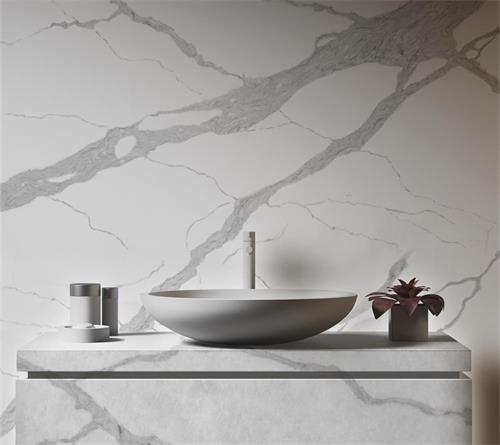
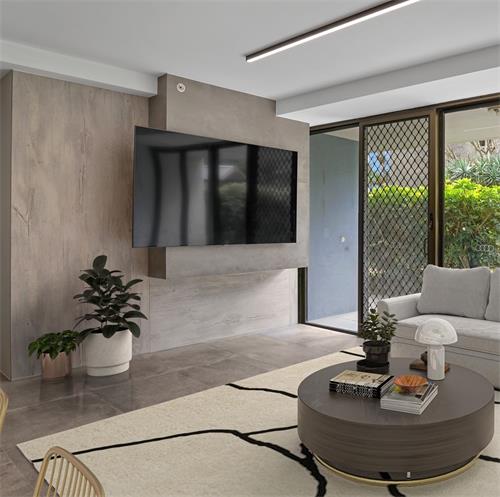
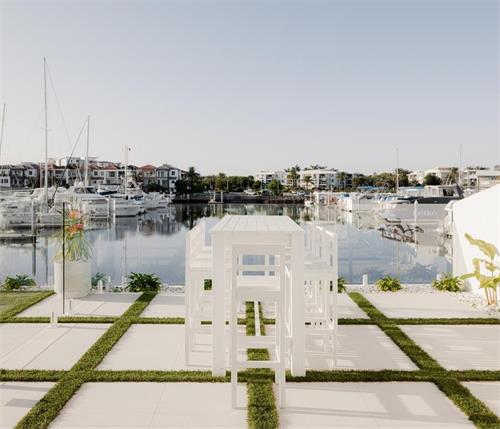
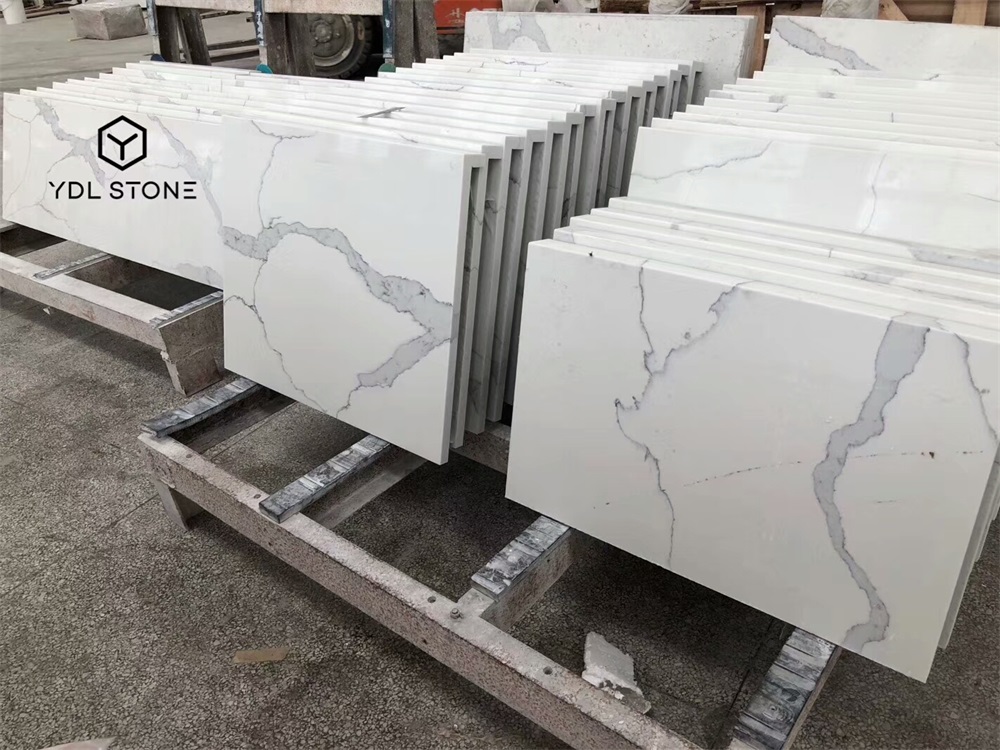









China is the world's largest exporter of natural and engineered stone, supplying approximately 35% of global stone imports. For importers, distributors, contractors, and project specifiers, sourcing stone directly from Chinese manufacturers offers significant cost advantages and access to the widest product variety. However, the import process involves specific steps that benefit from careful planning.
Chinese stone manufacturers typically offer 20–40% cost savings compared to equivalent products from other origins. These savings come from:
Vertical integration (quarry to finished slab)
Lower labor costs
Large-scale production facilities
Established export logistics infrastructure
China produces:
Approximately 70% of the world's engineered quartz
Significant natural stone production (granite, marble, quartzite)
Wide range of colors, finishes, and custom fabrication
Both standard and custom dimensions
Large Chinese manufacturers operate multiple production lines supporting consistent supply and reliable lead times. The Xiamen region is home to over 1,000 stone manufacturers within a 50-kilometer radius, creating a competitive supplier ecosystem.
Fujian Province, particularly the Xiamen-Quanzhou region, is China's primary stone manufacturing hub:
60%+ of China's stone exports originate from this region
25+ years of manufacturing heritage
Established port infrastructure
Concentrated supplier ecosystem
Significant processing and finishing facilities
Specialization in high-end engineered stone
Natural stone quarrying and primary processing
Granite and marble production
Before contacting suppliers, clearly define:
Product type: Engineered quartz, natural marble, granite, or quartzite
Specifications: Slab size, thickness, color, finish, edge profile
Quantity: Order volume (typically by container)
Certifications required: NSF, GREENGUARD, CE, ISO 9001, etc.
Target market standards: ASTM, AS/NZS, EN standards
Timeline: Required delivery date
Budget: Cost target including shipping and duties
Evaluating Chinese stone manufacturers requires due diligence:
Initial screening criteria:
Years in business (10+ years preferred)
Export experience and certifications
Manufacturing capacity and equipment
Client references and testimonials
Financial stability indicators
Verification methods:
Request business license and export license
Verify ISO 9001 certification through issuing body
Check export history through customs records
Request client references in your target market
Arrange virtual or in-person factory visits
Red flags to avoid:
Reluctance to provide business documentation
No verifiable third-party certifications
Pricing significantly below market (suggests quality issues)
Pressure for large upfront payments
No export experience or references
Once you've identified qualified candidates:
Request detailed quotes (EXW, FOB, CIF pricing options)
Ask for sample packs of relevant product lines
Evaluate samples for color consistency, finish quality, and edge profile
Request SGS or equivalent third-party test reports
YDL Stone provides sample packs, current test reports, and detailed quotations within 3–5 business days for standard products.
Standard import terms to clarify:
| Term | Definition | Common choice |
|---|---|---|
| EXW | Ex-works (buyer picks up at factory) | Experienced buyers with logistics partners |
| FOB | Free on Board (seller delivers to port) | Most common for buyers with freight forwarders |
| CIF | Cost, Insurance, Freight (seller arranges shipping) | Less common for stone |
| DDP | Delivered Duty Paid (seller handles everything) | Small-volume or new importers |
Payment terms:
30% deposit + 70% before shipment: Most common for new relationships
L/C (Letter of Credit): Standard for larger orders
30/70, 50/50 splits: Varies by supplier and relationship
Net 30 terms: Rare for new relationships, common for established accounts
Once an order is placed:
1. Production schedule: Confirmed timeline with milestones 2. Pre-production samples: Color and finish approval before full production 3. Mid-production inspection: Verify quality during manufacturing (recommended for large orders) 4. Pre-shipment inspection: Final QC before container loading 5. Loading supervision: Verify container condition and loading quality
Third-party inspection options:
[SGS](https://www.sgs.com/)
[Intertek](https://www.intertek.com/)
[Bureau Veritas](https://www.bureauveritas.com/)
Independent QC companies (recommended for orders >$50,000)
Stone shipping options:
| Method | Transit time | Cost | Best for |
|---|---|---|---|
| FCL (Full Container Load) | 15–35 days | Most economical per unit | Orders of 15+ tons |
| LCL (Less than Container) | 20–45 days | Higher per-unit cost | Small orders |
| Air freight | 3–7 days | Significantly higher | Samples, urgent orders |
Container types:
20' standard: Approximately 25–28 tons of stone
40' standard: Approximately 27–30 tons of stone
40' high cube: Maximum capacity for stone
Required shipping documents:
Commercial invoice
Packing list
Bill of Lading (B/L)
Certificate of Origin
Fumigation certificate (if applicable)
Insurance certificate
Test reports (if requested)
Upon arrival at destination port: 1. Customs broker: Engage licensed customs broker 2. Duty payment: Pay applicable customs duties 3. Customs inspection: Random or targeted inspections possible 4. Drayage: Container transport from port to warehouse 5. Container return: Empty container return to shipping line 6. Final delivery: Distribution to project site or warehouse
Typical customs considerations:
HTS code classification (stone typically falls under 6802 or 6810 series)
Country of origin marking requirements
Anti-dumping duties (currently no major cases for stone from China)
Phytosanitary certificates (not required for stone)
CE marking (for products entering EU)
Solution: Always order samples, conduct pre-shipment inspection for large orders, and verify certifications independently.
Solution: Clarify all costs upfront — production, packaging, loading, documentation, shipping, insurance, duties, and destination charges.
Solution: Use English-speaking sales representatives, confirm specifications in writing, and use clear technical drawings.
Solution: Specify A-frame loading for slabs, supervise loading when possible, photograph container condition before and after loading.
Solution: Review all documents carefully before shipment, ensure consistency across invoice, packing list, and B/L.
Solution: Insist on appropriate container bracing, photograph loading, document damage upon arrival, file claims promptly.
For ongoing stone sourcing, building a strong supplier relationship provides:
Priority production scheduling
Better pricing through volume
Custom product development
Improved payment terms over time
Quality consistency across orders
Successful long-term partnerships typically involve:
Regular communication (not just at order time)
Annual business reviews
Joint market development
Transparent issue resolution
Mutual commitment to growth
YDL Stone supports importers with over 25 years of export experience, serving more than 30 countries. The export team provides:
Sample evaluation and product recommendations
Detailed quotations with multiple term options
Pre-shipment inspection coordination
Documentation support for customs clearance
Logistics coordination through established forwarders
After-sales support for quality or shipping issues
The Melbourne, Australia warehouse provides local inventory for ANZ customers, reducing lead times and shipping costs for ongoing orders.
What is the minimum order quantity for stone imports? Typically 1 pallet for samples and small orders, 1 full container for production orders. Engineered quartz often requires one full container minimum per color.
How long does shipping from China take? Ocean freight typically takes 15–35 days depending on destination. Air freight is 3–7 days but significantly more expensive.
What payment terms are standard? 30% deposit with balance before shipment is most common. Established relationships may qualify for L/C or net terms.
Are Chinese stone products lower quality? Not necessarily. Many Chinese manufacturers produce world-class stone with proper certifications. Quality varies significantly between suppliers — verification is essential.
What is the typical import duty for stone? Duty rates vary by country and product type. Common rates: US 3–6%, EU 0–3%, Australia 0–5%, Canada 0–5%. Verify specific HTS codes for current rates.
Do Chinese suppliers handle CE marking? Yes, manufacturers supplying the EU must provide CE marking documentation. Verify certificates before ordering.
For new importers and existing buyers evaluating Chinese stone suppliers, YDL Stone provides import consultation including supplier verification, logistics coordination, and quality control support.
Contact our export team for import process guidance, sample requests, and quotation support for your next project.