









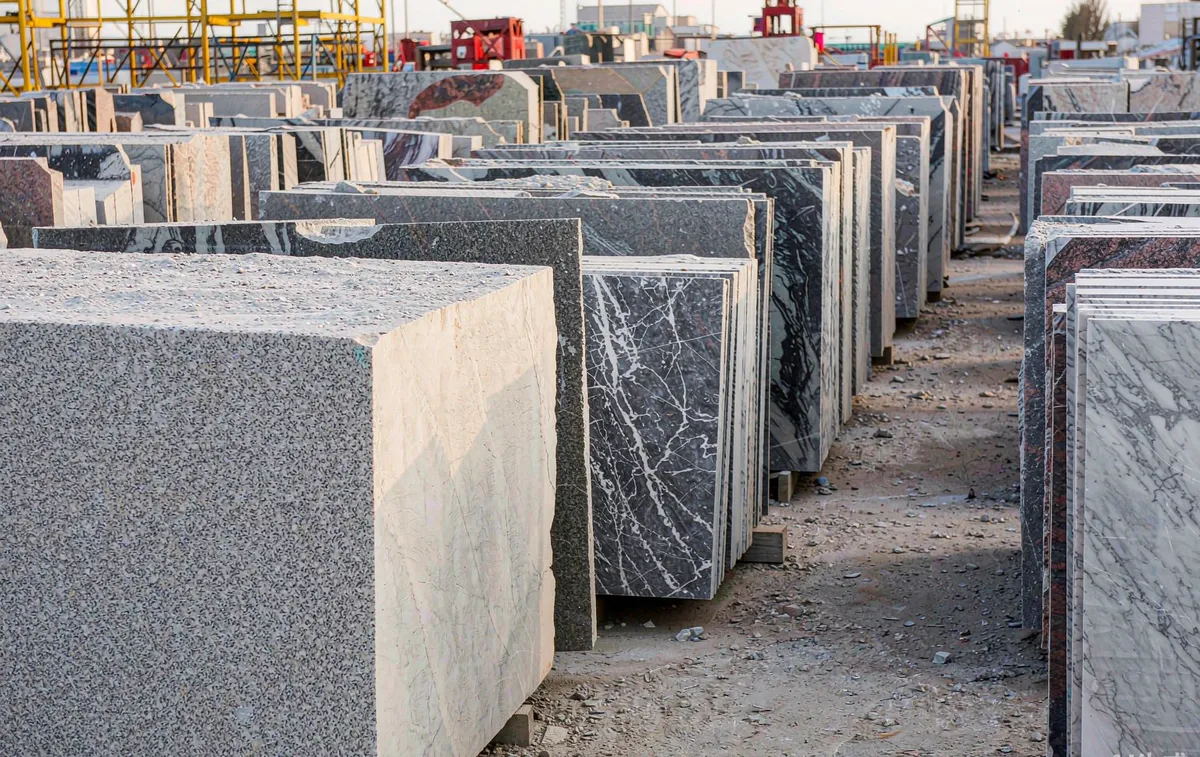
Every slab starts as a block, and every project margin is decided long before the gang saw runs. For importers buying granite, marble, quartzite, or travertine blocks, disciplined block selection is the single highest-leverage quality control step in the supply chain. A block that looks acceptable in a quarry photo can hide cracks, color bands, and veining faults that destroy yield at the sawing stage.
Wet the block surface or polish a small test window. Dry stone hides its true color. Check for:
Measure the block against the saw's maximum cutting envelope. Confirm length, width, and height allow your target slab sizes with adequate trim margin. Irregular blocks reduce effective yield even when quality is good.
Reputable programs back visual checks with laboratory data. Standards such as ASTM C97 (density and absorption), ASTM C99 (modulus of rupture), and EN 1341/12058 for European projects give buyers comparable numbers across lots. For large hotel or commercial projects, request petrographic analysis to confirm the stone's mineral identity — particularly important for quartzite, where mislabeled dolomite is common.
Importers who buy blocks through an experienced factory gain three advantages:
1. Resident inspection: Blocks are checked in person before loading, not from photos 2. Yield planning: Sawing direction is chosen to maximize sellable slabs and match veining to the project layout 3. Traceability: Block lot numbers are kept through production, so replacement slabs can be matched years later
At YDL Stone, block inspection happens at the quarry and again at our facility before production. Blocks that fail our checklist never enter the sawing queue. Learn more about our quality process or request a block-level inspection report with your next quotation.
Can I buy blocks without visiting the quarry? Yes, if your supplier performs documented on-site inspection with photos, videos, and test data. Remote buying without inspection is where most losses happen.
How much trim margin should I plan? Typically 5-10 cm per face depending on the material, plus allowance for squaring. Your sawing plan determines the exact figure.
Does a higher block price mean better yield? Not always. A cheaper block with 15% lower yield can cost more per usable square meter. Always compare yield-adjusted pricing.
Which tests matter most for hotel projects? Flexural strength (ASTM C99 or EN 12372), water absorption (ASTM C97), and slip resistance for flooring (ASTM C1028 or EN 14231 pendulum test).
Block selection is not paperwork — it is the moment your project's quality ceiling is set. Insist on documented inspection, yield-adjusted pricing, and traceable lot numbers, and your slabs will perform from container to installation.