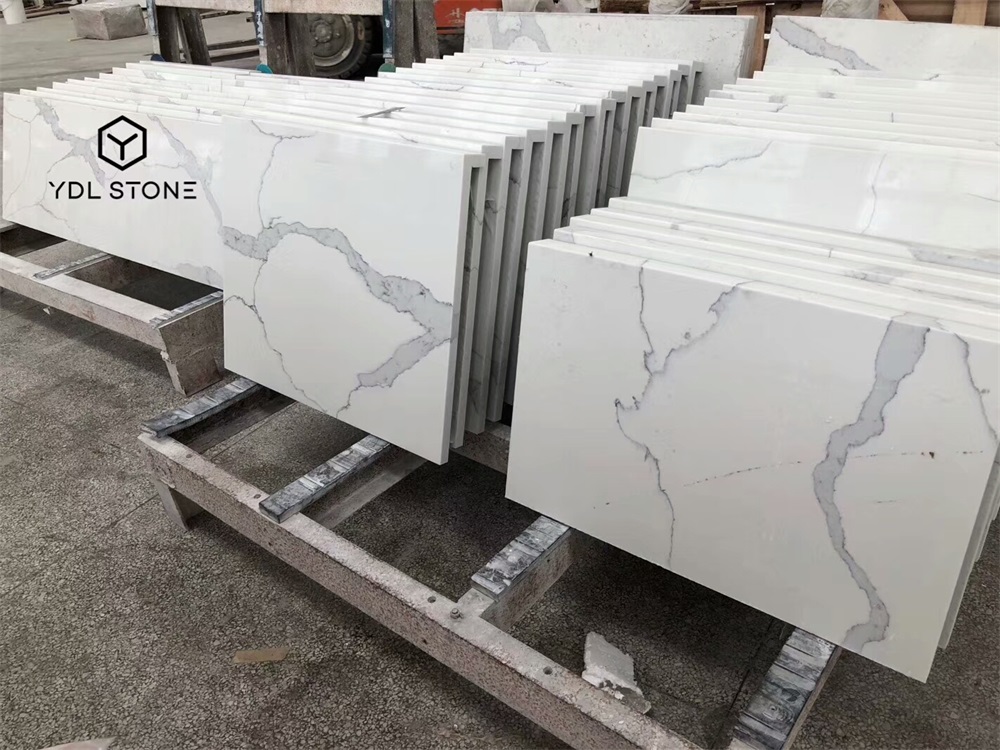









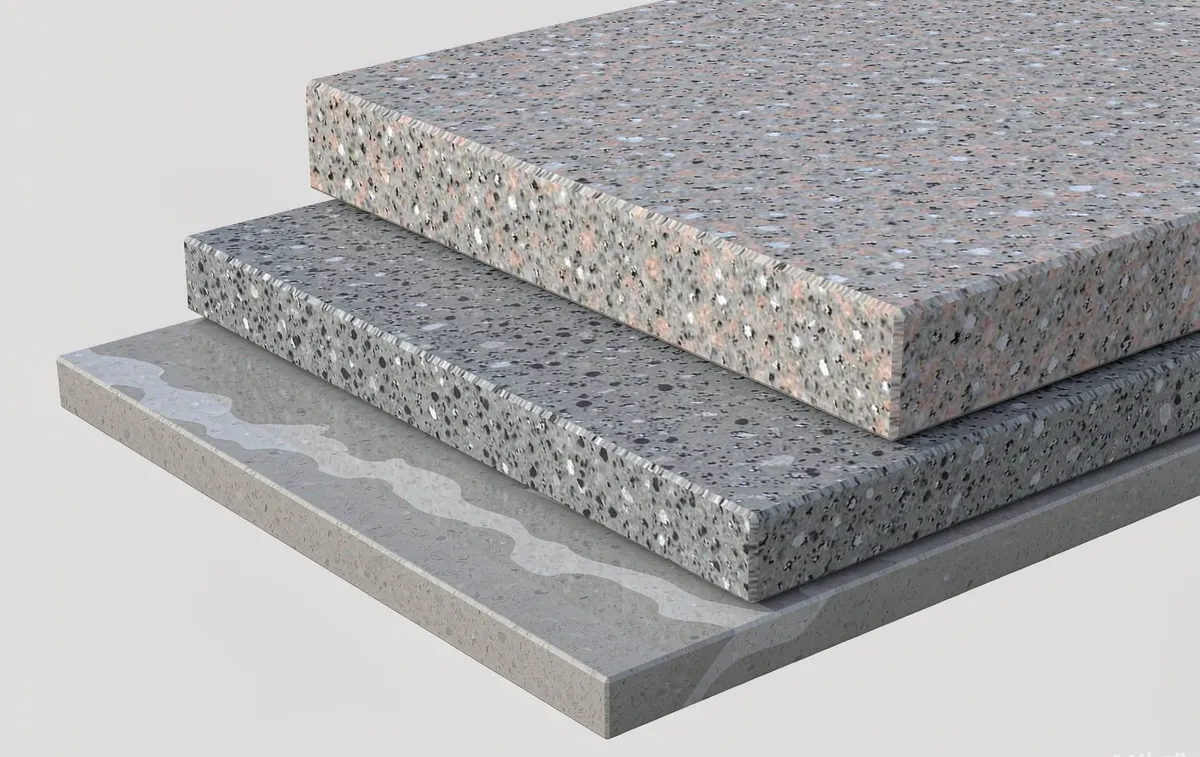
Slab thickness is one of those specifications that looks minor on paper and decides everything in production: cost, weight, edge options, and where the material can be installed. Walk any slab warehouse and you will find engineered quartz in 15 mm, 20 mm, and 30 mm — sometimes all three in the same color. Here is how to choose the right thickness for each application.
| Thickness | Typical Weight (per m²) | Common Uses |
|---|---|---|
| 15 mm | ~37 kg | Wall cladding, furniture, vertical surfaces |
| 20 mm | ~50 kg | Kitchen countertops (world standard) |
| 30 mm | ~75 kg | Statement islands, waterfall edges, bars |
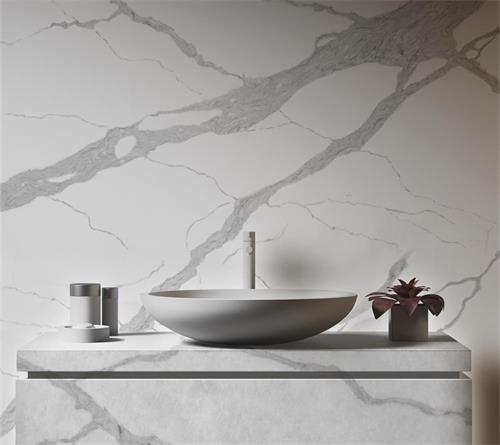
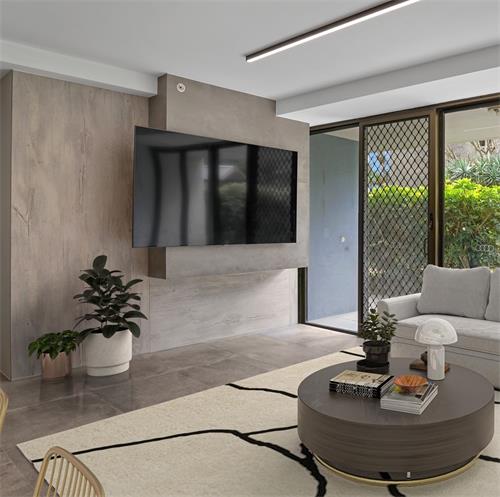
Fifteen-millimeter quartz has grown fastest in recent years, driven by wall and furniture applications:
Trade-offs: 15 mm spans require closer support spacing (framing at 400-500 mm centers), and it is not the choice for heavy-duty work surfaces without a full substructure.
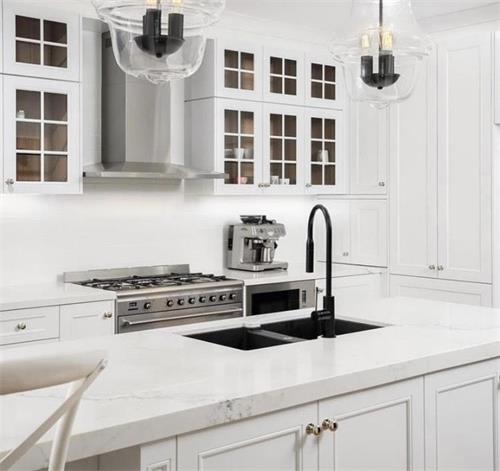
Twenty millimeters dominates world kitchen specifications, and for good reason:
If a specification does not say otherwise, 20 mm is the safe, correct answer for countertops.
Thirty millimeters delivers visual mass and physical presence:
Trade-offs: cost per square meter runs higher, weight demands stronger cabinets and more installers, and container loads carry fewer square meters. Some projects achieve the same look with a 20 mm slab and a mitered 100 mm edge — a technique worth discussing with your fabricator before paying full 30 mm pricing.
1. Which thicknesses are stocked in my chosen color — and in the same batch? 2. What is the support framing requirement for 15 mm vertical spans? 3. For a mitered-edge look, what is the price difference between 30 mm and built-up 20 mm? 4. How does thickness affect my container's usable square meters?
Is thicker quartz more durable? Thickness adds impact and bending strength, but surface hardness is identical. A well-supported 20 mm slab performs like 30 mm in daily use.
Can I mix thicknesses in one kitchen? Yes, and it is common: 30 mm island with 20 mm perimeter tops, or 15 mm splashback over a 20 mm counter.
Does thickness affect seaming? No. Seam quality depends on fabrication and leveling, not thickness.
Which thickness ships most efficiently? 20 mm balances strength and container efficiency; 15 mm maximizes square meters per container for cladding projects.
YDL Stone stocks 15, 20, and 30 mm quartz in matched batches plus natural stone slabs in standard and jumbo formats. Request thickness-specific quotations for your next kitchen, bathroom, or commercial project.