










INSIGHTS
Stone Export Crating: How Slabs Travel Safely from China
Source: | Author:YDL Stone Editorial Team | Published time: 2026-09-25 | 2 Views | 🔊 Click to read aloud ❚❚ ▶ | Share:

Stone Export Crating: How Slabs Travel Safely from China

A stone slab's hardest journey is not the quarry saw or the CNC mill — it is the six weeks between the factory and the jobsite. Ocean freight means vibration, humidity, handling by cranes and forklifts, and thousands of kilometers of road and rail at both ends. Professional export crating is what separates pristine containers from arrived-broken claims. Here is what actually protects stone at sea, and what importers should check before their next order.

The Packaging System, Layer by Layer

1. Slab Surface Protection

  • Foam sheets and plastic film between polished faces prevent abrasion and chemical marking
  • Corner protectors absorb the knocks that concentrate damage at slab edges
  • Strapping with edge guards holds bundles tight without biting into stone

2. Vertical A-Frame Bundles

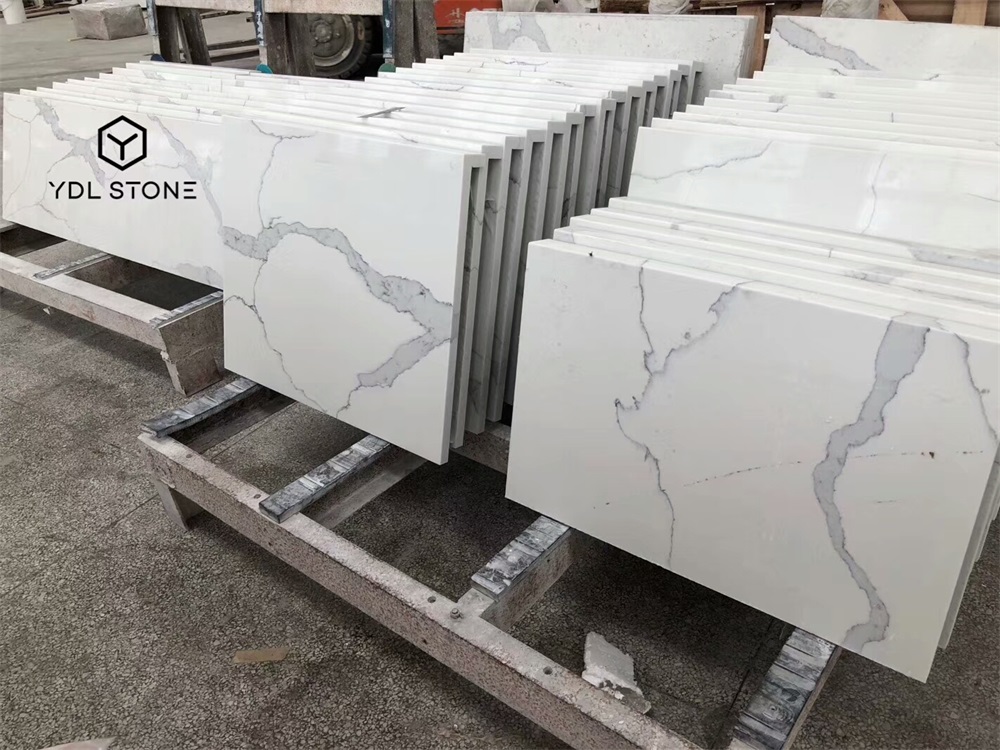
Slabs are never shipped flat. They lean at a slight angle (typically 5-15 degrees from vertical) on steel or wooden A-frames inside the crate:

  • Lean angle keeps load on the slab's strong axis
  • Cork or rubber separators between slabs prevent face-to-face rubbing
  • Bundle size is limited by weight — usually 5-8 slabs per bundle depending on thickness

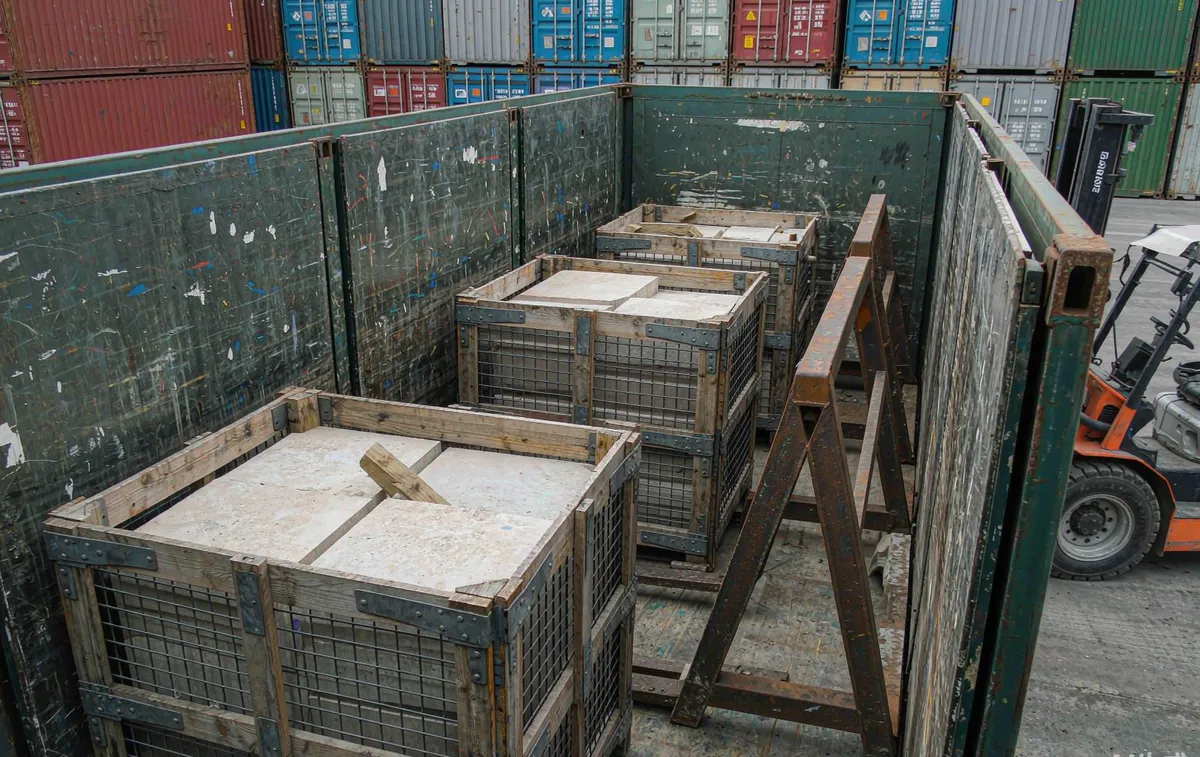
3. The Wooden Crate

  • Kiln-dried, fumigated timber compliant with ISPM 15 international phytosanitary standards
  • Full perimeter framing with diagonal braces against longitudinal shifting
  • Crate weight and dimensions calculated for the destination port's handling equipment

4. Container Loading and Bracing

Inside the container, loaded crates are:

  • Positioned over the container's structural supports, weight balanced axle-to-axle
  • Braced with timber, airbags, or steel bars so nothing shifts when the vessel rolls
  • Documented with a loading plan and photos before the doors are sealed

What Goes Wrong Without Professional Crating

  • Vibration cracking: Unbraced bundles flex over weeks of transit; micro-cracks become visible breaks
  • Face scratches: Missing foam separators let polished faces grind against each other
  • Corner damage: Slabs loaded without edge protection chip at the most visible point
  • Moisture staining: Trapped water in non-breathing packaging stains light marble and travertine

What Importers Should Verify

1. ISPM 15 stamp on all timber — customs will hold non-compliant crates 2. Loading photos before sealing: Reputable suppliers send them without being asked 3. Insurance against actual packing method: Claims fail when packing did not meet carriage standards 4. Unloading guidance: Slabs stay on A-frames until they reach the fabricator's own racks

Quartz vs Natural Stone: Packing Differences

Engineered quartz travels predictably — uniform slabs, uniform weight. Natural stone needs material-specific care:

  • Marble and onyx: Softer and more fragile; lighter bundles and extra padding
  • Granite and quartzite: Heavier bundles; container weight limits are the constraint
  • Travertine: Unfilled surfaces can trap packing debris; breathable wrapping matters

Frequently Asked Questions

How many square meters fit in one 20-foot container? Roughly 400-500 m² of 20 mm slabs in standard formats, depending on the material's weight and crate design. Jumbo formats reduce usable area.

Who is responsible for transit damage? Depends on Incoterms. Under FOB and CIF, buyer's marine insurance applies; the packing quality still determines whether claims succeed.

Should slabs be inspected on arrival? Yes — inspect and photograph every bundle before signing delivery, noting damage on the carrier's receipt while the driver is present.

Can I mix slabs and cut-to-size pieces in one container? Yes, with a loading plan that separates crates by destination and handling method.

Shipping That Protects the Product

YDL Stone packs every export order to ISPM 15 standards with photographed loading plans, A-frame crating, and material-specific bundle design. Request a packing specification sheet with your next quotation and see exactly how your slabs will travel.