








Quartz countertops are among the most durable surface options available, but their actual lifespan depends on multiple factors. Understanding what affects longevity helps homeowners maximize their investment and make informed decisions about material selection for long-term installations.
Engineered quartz countertops typically last 25 to 30 years with proper care, with some installations exceeding this range. This places quartz on par with or exceeding the lifespan of most natural stone countertops when factoring in maintenance requirements.
| Material | Average lifespan | Factors affecting longevity |
|---|---|---|
| Engineered quartz | 25–30 years | Resin stability, UV exposure, care |
| Natural granite | 30+ years | Sealing, climate, use patterns |
| Marble | 20–30 years | Acid exposure, sealing, care |
| Solid surface | 15–25 years | Scratch repair, yellowing |
| Laminate | 10–20 years | Water damage, delamination |
| Wood (butcher block) | 15–25 years | Refinishing, water exposure |
According to Remodeling Magazine's annual Cost vs. Value Report, quartz countertops typically return 60–80% of their installation cost in home resale value, reflecting their longevity and broad buyer appeal.
The polymer resin binder accounts for 5–10% of engineered quartz and is the most vulnerable component. Higher quality resins:
Resist UV degradation better
Maintain color stability longer
Withstand thermal cycling
Resist yellowing over time
Premium manufacturers use higher-grade resins with better UV stabilizers, significantly extending product lifespan.
Engineered quartz is designed primarily for indoor use. UV exposure causes:
Yellowing: Resins oxidize with prolonged sunlight
Surface degradation: UV breaks down polymer bonds
Color fading: Particularly visible in darker colors
For sun-exposed installations, specify UV-stabilized formulations or consider natural stone alternatives.
Repeated thermal cycling — hot pans, cold items, rapid temperature changes — degrades the resin-quartz bond over time. Using trivets and avoiding thermal shock significantly extends lifespan.
While quartz is scratch-resistant, heavy impacts can:
Chip edges
Crack slabs (especially near cutouts)
Damage seams
Proper use (no standing on counters, careful with heavy objects) preserves longevity.
Harsh chemicals damage resin:
Strong acids: Can etch surface
Strong bases: May degrade resin
Solvents: Acetone and similar products cause damage
Bleach: Long-term exposure yellows resin
Using appropriate cleaners preserves resin integrity.
Higher-quality manufacturing produces longer-lasting products:
Better raw material consistency
More thorough curing cycles
Tighter quality control
Verified certifications
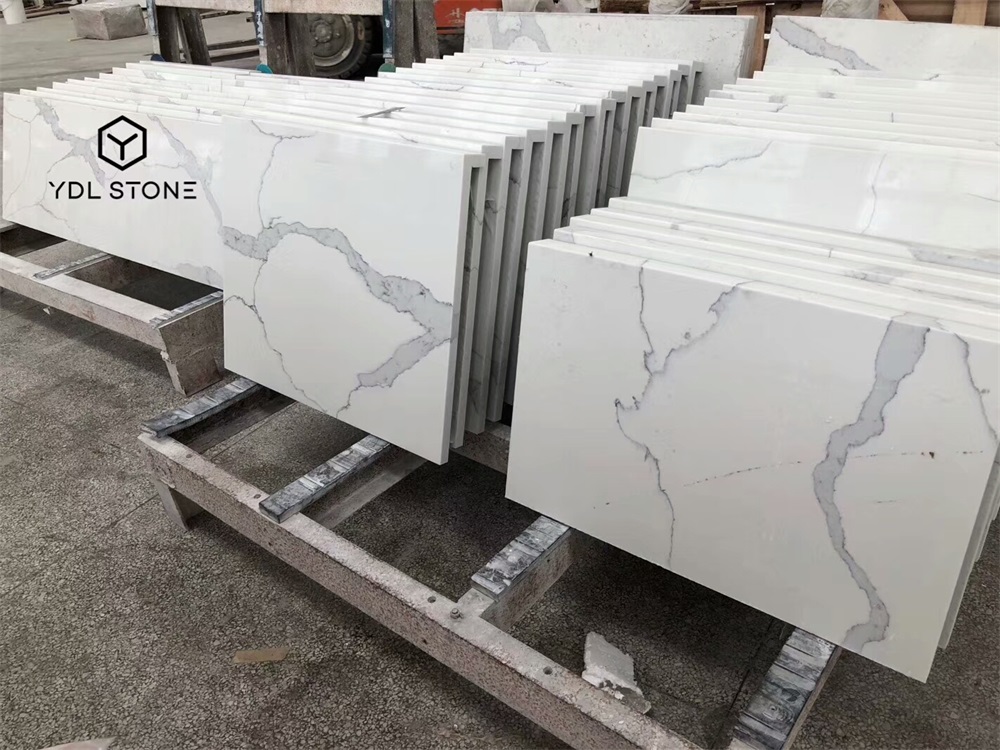
Reputable manufacturers like YDL Stone back their products with 10–15 year warranties, reflecting expected lifespan under normal use.
1. Use cutting boards: Protects surface and your knives 2. Use trivets: Prevents thermal damage 3. Wipe spills promptly: Prevents staining and surface damage 4. Avoid standing on counters: Distributes weight improperly
1. Deep clean with appropriate products: Mild soap and water 2. Inspect seams: Address issues before they worsen 3. Check caulking: Around sinks and cooktops 4. Document any changes: Photos help track condition
1. Annual professional inspection: For older installations 2. Re-caulk as needed: Every 2–3 years typically 3. Address chips promptly: Prevent water intrusion 4. Maintain documentation: Warranty and care records
1. Bleach-based cleaners: Yellow resin over time 2. Abrasive scrubbers: Create micro-scratches 3. Direct heat without trivets: Thermal damage 4. Standing water: Prolonged exposure 5. Heavy impacts near edges: Chips and cracks
Understanding normal aging signs helps distinguish cosmetic issues from structural concerns:
Slight gloss reduction: Surface may become slightly less reflective over 15+ years
Subtle color shifts: Minimal but possible over decades
Edge wear: Slight rounding at frequently touched areas
Visible cracks: Need immediate professional assessment
Significant discoloration: May indicate resin damage
Seam separation: Should be addressed promptly
Chipping: Repairs possible but indicate stress
Water damage at seams: May indicate caulk failure
Large cracks through slab: Compromises structural integrity
Severe resin degradation: Surface becomes soft or crumbly
Extensive impact damage: Multiple repair areas
Section replacement failure: When seams become unreliable
Most quartz manufacturers offer warranties ranging from 10 years to lifetime, covering manufacturing defects but not:
Heat damage: From hot cookware without trivets
Impact damage: From dropped heavy objects
Chemical damage: From inappropriate cleaners
Improper installation: When not following guidelines
Normal wear: Cosmetic changes over time
YDL Stone engineered quartz comes with a 10-year residential warranty covering manufacturing defects, with proper care documentation recommended for warranty validation.
| Factor | Quartz | Granite |
|---|---|---|
| Initial appearance | Maintained longer | Develops patina |
| Sealing | Never required | Every 1–2 years |
| Stain resistance | Excellent (non-porous) | Good with sealing |
| Heat tolerance | Limited (resin) | Excellent |
| UV resistance | Limited | Excellent |
| 30-year cost | Lower | Higher (maintenance) |
For indoor kitchens, quartz typically provides lower lifetime cost and more consistent appearance. For outdoor kitchens or extreme heat exposure, granite may be preferable.
| Factor | Quartz | Marble |
|---|---|---|
| Acid resistance | Excellent | Poor (etches) |
| Etching concerns | None | Constant risk |
| Stain resistance | Excellent | Moderate |
| Appearance stability | Excellent | Develops patina |
| Repair options | Limited | Good (polishing) |
Quartz is generally lower-maintenance over decades, while marble offers patina character that some homeowners appreciate.
Replacement is typically warranted when:
1. Structural failure: Major cracks or seam failures throughout 2. Extensive surface damage: Multiple repair areas 3. Outdated appearance: Style preferences have changed 4. Remodeling project: Kitchen renovation includes other elements 5. Water damage: Compromised substrate from prolonged exposure 6. Age exceeding warranty: Preventive replacement before failure
Replacement costs are similar to initial installation, so extending lifespan through proper care provides clear economic benefits.
When quartz countertops eventually require replacement, consider:
Resale value: Quality quartz has scrap value
Repurposing: Cut into smaller pieces for tables, shelves
Crushing: Processed into aggregate for construction
Donation: Habitat for Humanity ReStores sometimes accept
The longevity of quartz reduces replacement frequency, contributing to better environmental profiles than shorter-lifespan materials.
Industry data shows:
First-generation quartz (1990s): Many installations still functional after 25+ years
Modern formulations: Improved UV resistance and resin stability
Warranty claims: Below 2% for major manufacturers
Customer satisfaction: 85%+ rate their quartz as "meeting" or "exceeding" expectations over 10+ years
What is the typical warranty for quartz countertops? Most manufacturers offer 10–15 year warranties. Some premium brands offer lifetime residential warranties.
Does quartz yellow over time? Lower-quality quartz may yellow slightly with UV exposure. Premium products with quality resins and UV stabilizers resist yellowing for decades.
Can quartz be repaired if damaged? Minor chips and cracks can often be repaired. Major damage may require section replacement.
How does quartz compare to granite for long-term value? Quartz typically offers lower lifetime cost due to no sealing requirements, while granite may appeal to those preferring natural materials.
Can quartz last 50 years? With exceptional care and favorable conditions, premium quartz installations may reach 50 years, though this exceeds typical warranty periods.
What is the most common reason quartz fails? Improper installation or physical impact are the most common failure causes, not material degradation.
Following the care guidelines outlined in this article helps engineered quartz reach or exceed its expected lifespan. YDL Stone provides care guides, warranty documentation, and ongoing support for all engineered quartz products.
Request care guide or contact our customer support for installation-specific care recommendations.