









ISO 9001:2015 is the internationally recognized standard for quality management systems. For stone manufacturers, certification signals a systematic approach to consistent quality, traceability, and continuous improvement. Understanding what ISO 9001:2015 actually requires helps buyers evaluate stone suppliers beyond marketing claims.
ISO 9001:2015 is the fifth edition of the world's most widely adopted quality management standard. Published by the International Organization for Standardization, it specifies requirements for a quality management system (QMS) that organizations use to demonstrate their ability to consistently provide products and services that meet customer and regulatory requirements.
The 2015 revision emphasized:
Risk-based thinking: Proactive identification of potential issues
Leadership engagement: Management accountability for quality
Process approach: Systematic management of activities
Context awareness: Understanding organizational environment
Continuous improvement: Ongoing QMS enhancement
The standard's requirements apply to all certified organizations, including stone manufacturers:
Documented procedures for all key processes
Quality manual outlining the QMS structure
Regular review and update of documentation
Top management commitment to quality
Defined quality objectives
Regular management review meetings
Resource allocation for quality
Competent personnel with defined training
Adequate infrastructure and work environment
Documented competence requirements
Customer requirement identification
Design and development controls
Purchasing controls for materials
Production and service provision controls
Monitoring and measuring equipment calibration
Customer satisfaction monitoring
Internal audits of the QMS
Nonconformity identification and corrective action
Data-driven decision making
Continuous improvement processes
Certified manufacturers maintain:
Standardized processes: Every batch follows documented procedures
Calibrated equipment: Measurement devices regularly calibrated
Trained personnel: Staff competence verified and documented
Documented traceability: Each batch traceable to raw materials and processes
ISO 9001's risk-based thinking helps manufacturers:
Identify potential quality issues before they occur
Implement preventive actions
Reduce defect rates
Minimize supply chain disruptions
The standard requires ongoing enhancement:
Regular internal audits identify improvement opportunities
Customer feedback drives process refinement
Corrective actions address root causes, not just symptoms
Performance metrics track improvement over time
Certified manufacturers provide:
Batch identification numbers
Raw material supplier records
Production date and line records
Quality test results per batch
Customer shipment records
Different certifications address different aspects of stone manufacturing:
| Certification | Primary focus | Application |
|---|---|---|
| ISO 9001:2015 | Quality management system | Manufacturing processes |
| NSF/ANSI 51 | Food contact safety | Product-specific |
| GREENGUARD Gold | Indoor air quality | Product-specific |
| CE Marking | European conformity | Product-specific |
| ISO 14001 | Environmental management | Manufacturing processes |
| ISO 45001 | Occupational health & safety | Workplace |
ISO 9001:2015 is the foundational quality certification that supports other product-specific certifications.
Not all certification claims are equal. To verify:
Ask for the actual certificate, including:
Certification body name
Certificate number
Issue date and expiry date
Scope of certification (specifically mentioning stone products)
Address of certified facilities
Confirm the certifying body is accredited by a recognized accreditation body
IAF member bodies (International Accreditation Forum) are widely recognized
Examples: ANAB (US), UKAS (UK), JAS-ANZ (Australia/New Zealand)
ISO 9001 certificates are valid for 3 years
Annual surveillance audits required
Suspension can occur if nonconformities are found
Confirm certification covers:
The specific manufacturing processes used
The product types being supplied
All relevant production locations
A typical stone manufacturer's ISO 9001 implementation includes:
Raw material inspection procedures
Production process specifications
Quality control testing protocols
Nonconformity handling procedures
Corrective action processes
Raw material inspection records
Production batch records
Quality test reports
Equipment calibration records
Training records
Customer feedback logs
Quarterly process audits
Annual full QMS audits
Corrective action tracking
Management review meetings
Customer requirement documentation
Order review procedures
Customer satisfaction surveys
Complaint handling processes
Delivery performance tracking
False. ISO 9001 certifies the quality management system, not individual products. Consistent systems produce consistent results, but specific products must still meet specifications.
False. Certifying bodies vary in rigor. IAF-accredited certifications from recognized bodies carry more credibility.
False. Certifications require surveillance audits annually and recertification every 3 years.
False. Implementation typically takes 6–12 months with significant documentation and process changes.
False. The standard requires defect identification and corrective action, not elimination of all defects.
Some manufacturers pursue additional certifications:
Environmental impact reduction
Resource efficiency
Waste management
Supports sustainability claims
Worker safety systems
Hazard identification
Health risk management
CE marking for European market
NSF/ANSI 51 for food contact
GREENGUARD Gold for indoor air quality
Combined certifications demonstrate comprehensive quality commitment beyond basic ISO 9001 requirements.
ISO 9001 certification involves ongoing costs:
Initial implementation: $20,000–$100,000+
Annual surveillance audits: $5,000–$20,000
Recertification every 3 years: $10,000–$30,000
Internal resources for QMS maintenance
These costs are typically reflected in product pricing but provide:
Lower defect rates (less waste)
Consistent quality (fewer customer complaints)
Better customer retention
Premium pricing justification
For buyers, the small price premium for ISO 9001 certified products typically provides better value through consistent quality.
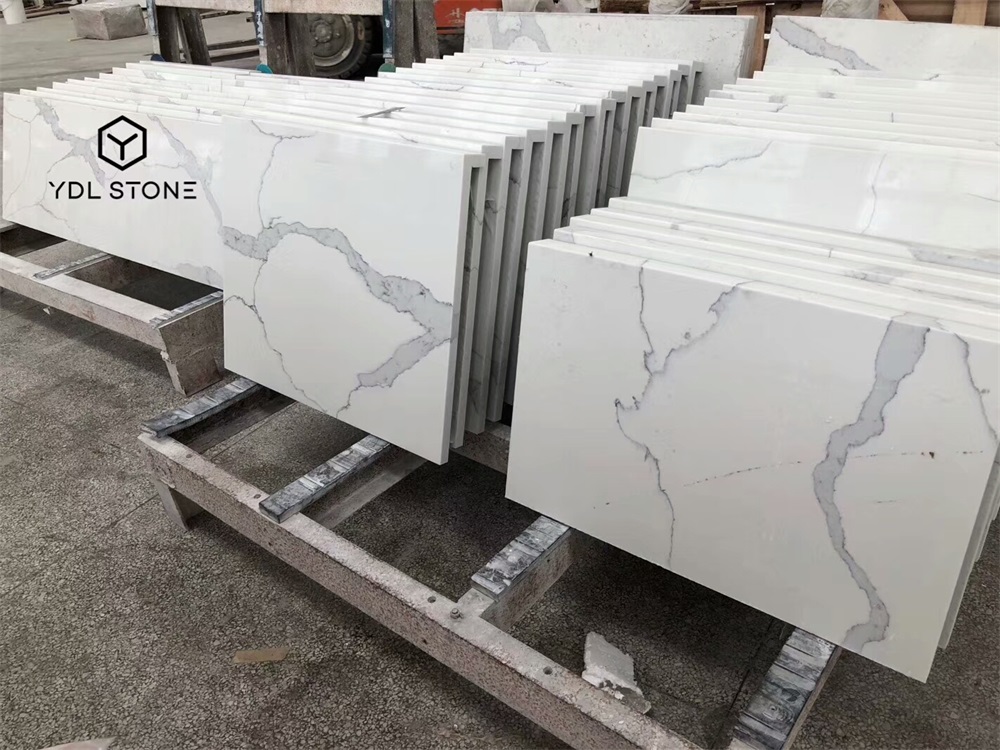
YDL Stone maintains ISO 9001:2015 certification covering all production processes at Xiamen manufacturing facilities. The quality management system includes:
Documented procedures for every production stage
ISO 17025 accredited laboratory testing
Customer complaint resolution processes
Annual management review meetings
Continuous improvement initiatives
The certification has been maintained continuously, demonstrating long-term commitment to quality management.
When evaluating stone manufacturers:
1. Verify current certification: Not just historical claims 2. Check certification scope: Specific products and processes 3. Review audit reports: Available from some certification bodies 4. Request quality documentation: Test reports, certificates of analysis 5. Visit facilities: When possible, in-person verification
Is ISO 9001:2015 required for stone manufacturers? No, it's voluntary. However, certification signals commitment to quality and is increasingly required by commercial buyers.
How long does ISO 9001 implementation take? Typically 6–12 months for initial certification, with ongoing maintenance.
What is the difference between ISO 9001 and ISO 14001? ISO 9001 focuses on quality management; ISO 14001 focuses on environmental management.
Does ISO 9001 apply to product quality or process quality? Primarily process quality. Consistent processes produce consistent product quality.
How much does ISO 9001 certification cost? Costs vary but typically range from $20,000–$100,000 for initial implementation plus annual audit costs.
Can I trust a manufacturer without ISO 9001? Some excellent manufacturers operate without certification. However, ISO 9001 provides third-party verification of quality systems.
For buyers evaluating stone suppliers, ISO 9001:2015 certification provides foundational quality assurance. YDL Stone provides current certification documentation, quality system summaries, and complete quality records with each shipment.
Request quality documentation or contact our quality team for specification support.