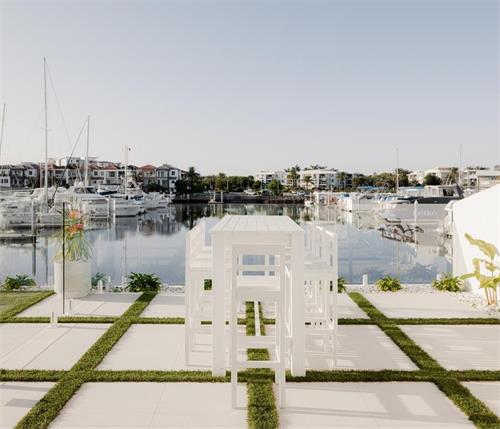










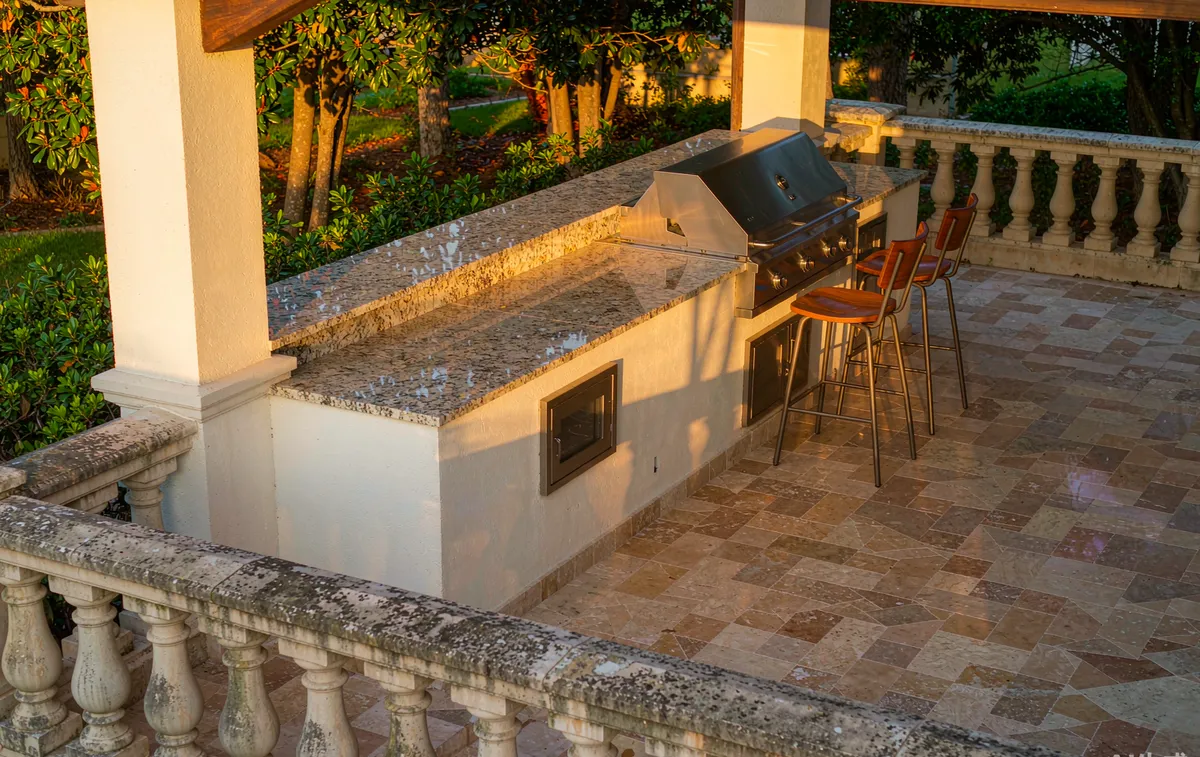
Outdoor kitchens, pool surrounds, and facade cladding put stone through tests no interior ever faces: years of ultraviolet exposure, freeze-thaw cycling, standing water, pollen, barbecue grease, and sunscreen. Materials that perform flawlessly indoors can fade, spall, or stain outdoors within a few seasons. Choosing correctly at specification stage costs nothing; choosing wrongly costs a demolition.
UV attacks organic binders. Engineered quartz contains polymer resin, and in full sun that resin gradually discolors — light colors yellow first. Natural stone contains no resin, so granite, quartzite, and travertine hold their color indefinitely. Sintered porcelain, being fully vitrified, is also UV-stable.
Water enters pores, freezes, expands roughly 9% in volume, and progressively splits the surface from within. The defense is low water absorption:
Specify stones with published absorption test data (ASTM C97 or EN 1936) for cold-climate projects.
Barbecue grease, wine, leaves, and tannins stain porous surfaces; shade and irrigation grow algae and moss. Outdoor stone needs a penetrating sealer rated for exterior use, refreshed annually, and textures that tolerate pressure washing.
1. Slope everything: Countertops and copings need 1-2% fall so water never ponds 2. Overhang drip edges: Keep water off cabinet bases and walls 3. Drainage behind cladding: Rainscreen systems stop water being held against stone 4. Seasonal sealing: Exterior sealer weathers — set an annual maintenance calendar, not a one-time promise
Can I use indoor quartz outside? Not recommended. UV degrades the resin, causing discoloration and surface weakening, especially in light colors.
Which stone stays coolest around pools? Light-colored travertine reflects heat and its porous structure dissipates it, keeping surfaces comfortable barefoot.
How often should outdoor stone be sealed? Annually in most climates; twice yearly for porous stones like travertine in wet or shaded areas.
Does freeze-thaw crack granite? Dense, low-absorption granite with proper detailing performs through decades of freeze-thaw; it is the standard for cold-climate exterior work.
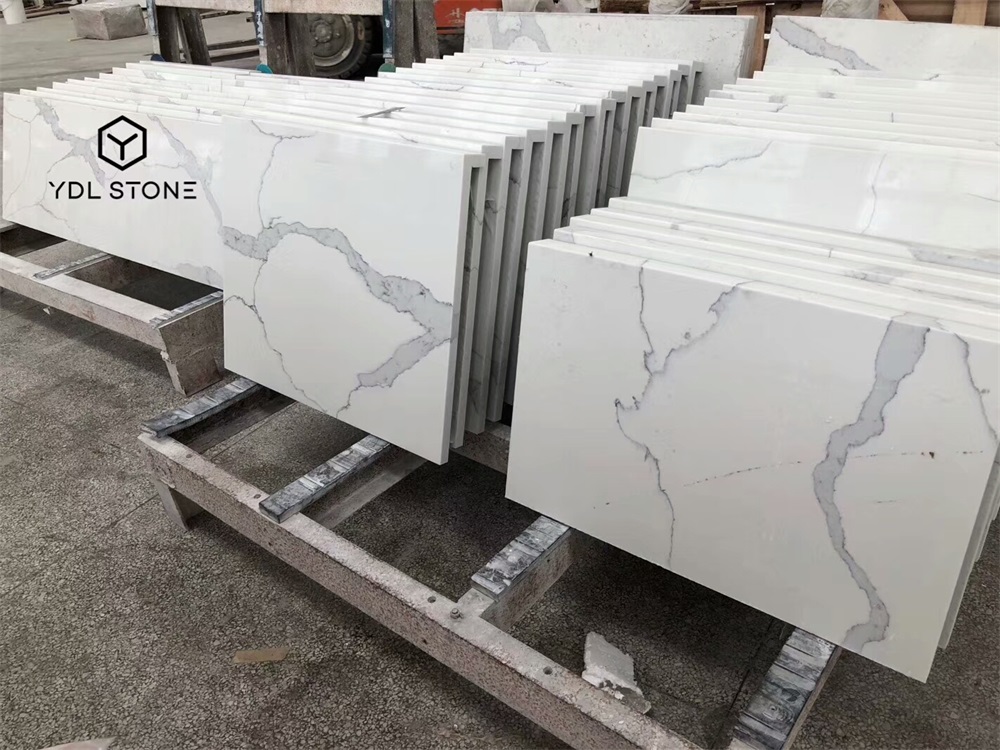
YDL Stone supplies granite, quartzite, and travertine slabs and cut-to-size pieces for outdoor kitchens, pool projects, and facades — with absorption and strength test data on request. Consult our team to match material to your climate zone.