








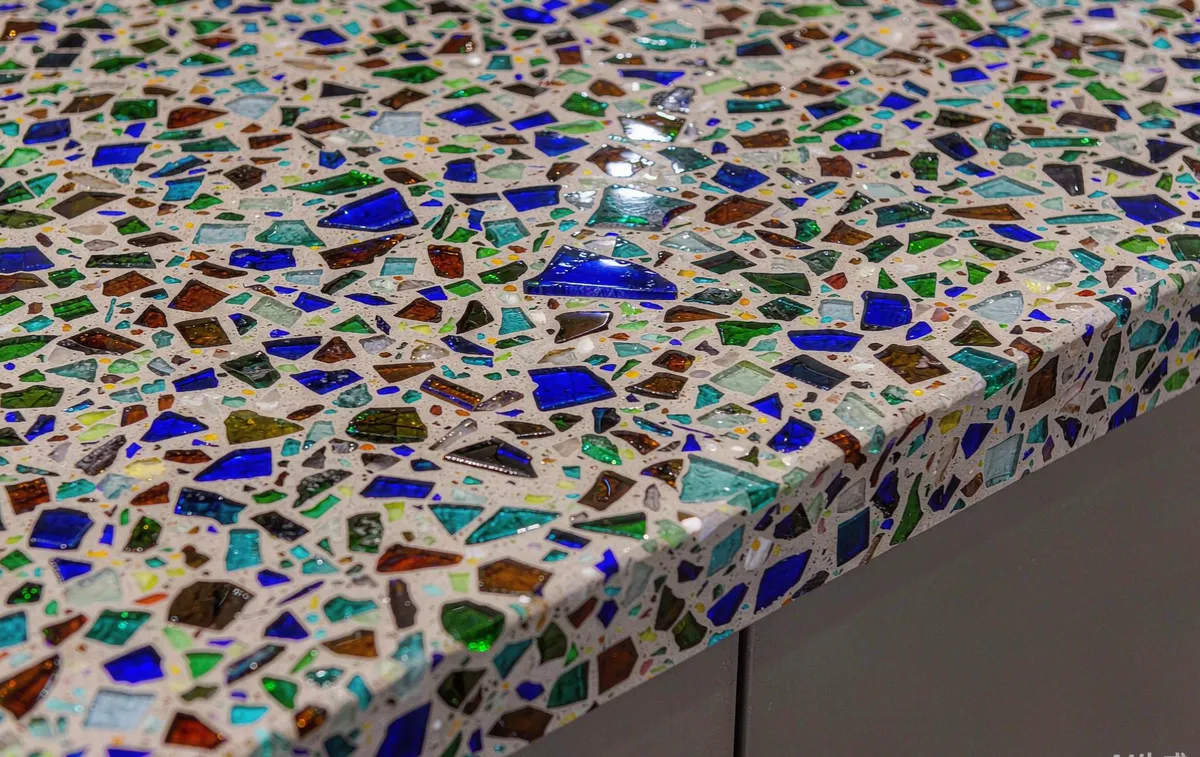
Sustainability has moved from marketing language to specification requirement. Architects now routinely ask for recycled content percentages, Environmental Product Declarations (EPDs), and certifications when selecting surfaces — and two material families answer that call: recycled glass surfaces and lower-impact engineered quartz. Here is how they are made, what the certifications actually mean, and where they belong.
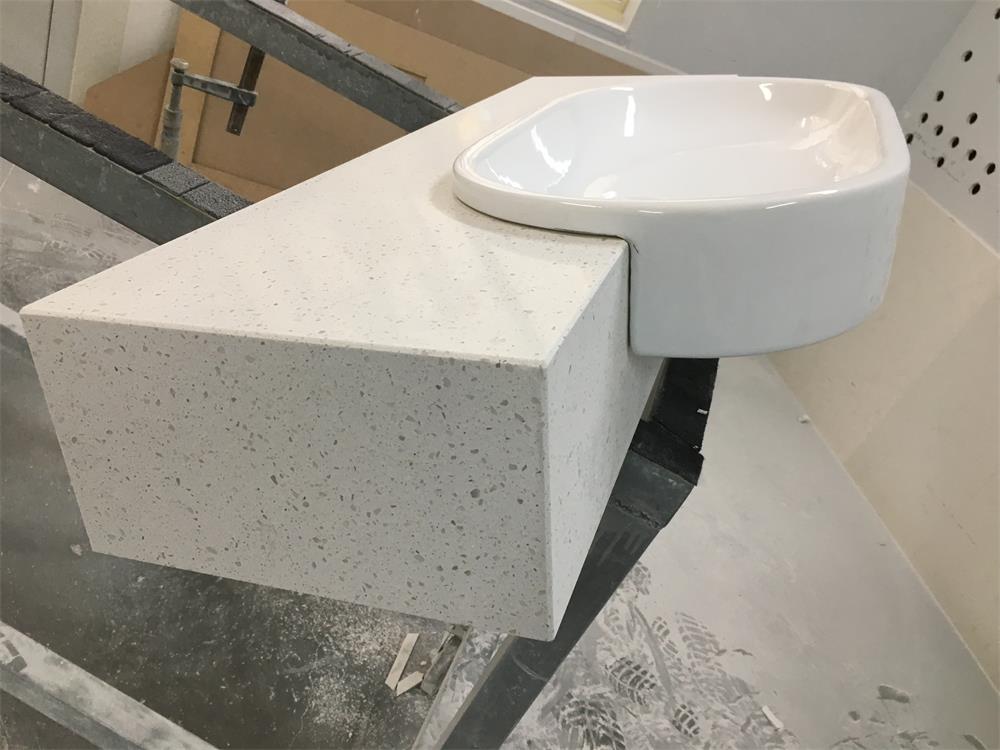
Recycled glass surfaces bind crushed post-consumer and post-industrial glass — bottles, windows, windshields — in a cement or resin matrix:
Each square meter diverts roughly dozens of glass bottles from landfill, and glass is infinitely recyclable — the chip in your countertop could be on its third life.
Standard engineered quartz is already mineral-heavy, but several levers lower its footprint:
1. Recycled content: Post-industrial quartz dust and recycled glass integrated into the mix 2. Low-silica reformulation: Newer blends reduce crystalline silica — a worker-safety win aligned with regulatory direction in markets like Australia 3. Manufacturing efficiency: Solar-powered plants, water recycling in production lines, and scrap-slab reuse programs 4. Durability as sustainability: A surface lasting 25+ years replaces multiple short-lived countertops — longevity is the quiet core of green specification
| Certification | What It Verifies |
|---|---|
| NSF/ANSI 51 | Food-contact safety of the surface |
| GREENGUARD Gold | Low chemical emissions for indoor air quality |
| EPD (Environmental Product Declaration) | Third-party verified lifecycle environmental data |
| LEED contribution (MR, EQ credits) | Recycled content, low emissions for green building points |
| ISO 14001 (manufacturer) | Environmental management systems at the factory |
Beware vague claims: "eco-friendly" without a certificate or EPD number is decoration, not documentation. Ask for the certificate number and verify it on the issuer's public registry.
Is recycled glass as durable as quartz? Resin-based glass surfaces are comparable in scratch and stain performance; cement-based versions need sealing like natural stone.
Do recycled surfaces earn LEED points? Yes — typically through recycled-content (MR) and low-emission (EQ) credits, supported by EPDs and certificates.
Are these surfaces food safe? Certified resin-based lines carry NSF/ANSI 51; always check the certificate, not the brochure.
What should I ask a supplier? Recycled content percentage, EPD number, emissions certification, and silica content declaration — with documents, not adjectives.
YDL Stone supplies certified quartz lines and advises on recycled glass pairings for green building projects. Request certification packages and EPDs with your next surface quotation.