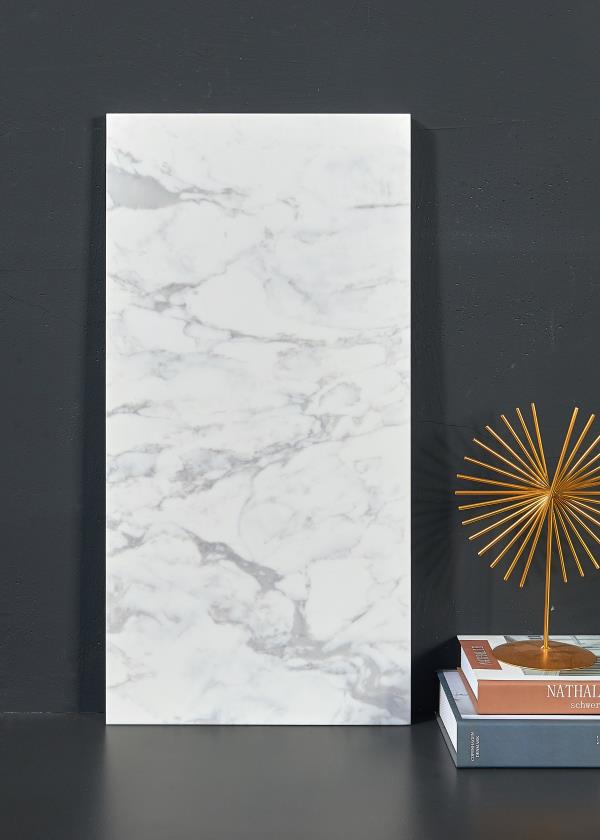
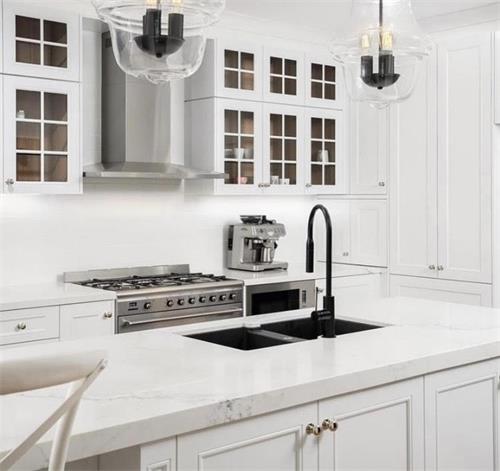
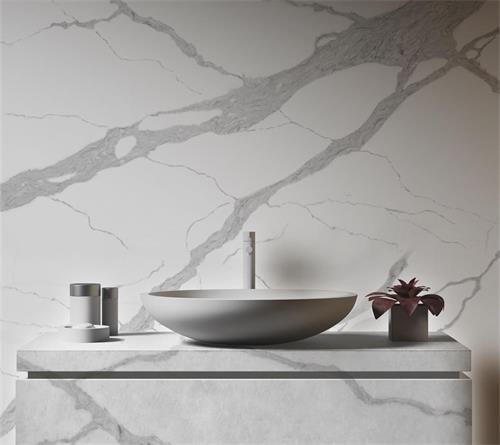










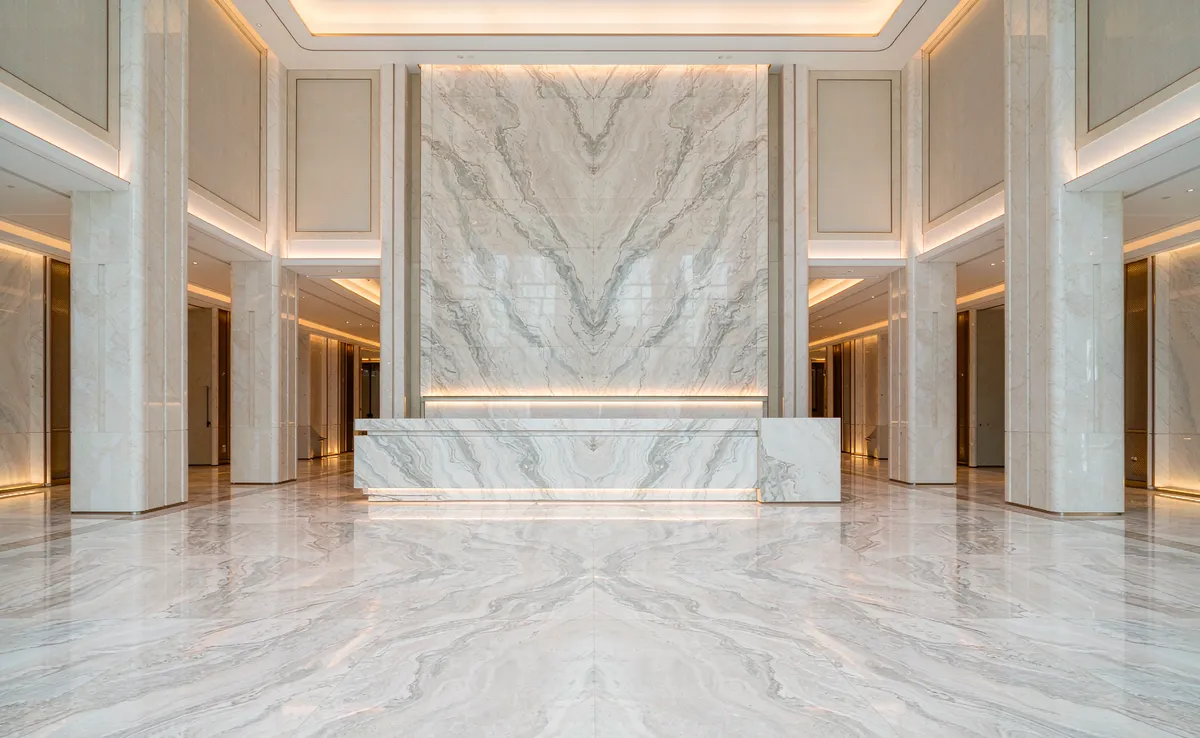
Marble remains one of the most requested materials in hospitality design, and for good reason: no engineered surface reproduces the depth of its veining or the way polished marble reflects light in a lobby. Yet marble is also the natural stone most likely to disappoint a hotel operator when it is specified without a maintenance plan. Etched spots on a bar top, gray traffic lanes on a lobby floor, and dull patches around a pool are not manufacturing defects — they are predictable outcomes of marble's chemistry and hardness. This guide explains what causes those outcomes, how to specify marble so the right finish goes in the right zone, and how to structure a maintenance program that keeps marble looking intentional for years.
Marble is a metamorphosed limestone, composed mainly of calcite. Two properties of calcite drive nearly every service issue in a hotel:
These are material facts, documented in standard geology and dimensional-stone references such as ASTM C119 terminology and the Marble Institute of America / Natural Stone Institute design manuals. They do not make marble a poor choice — they make it a material that rewards correct zoning and planning.
The finish choice is the single most effective maintenance decision. A polished surface shows every etch mark and scratch as a glossy interruption; a honed (matte) surface disperses the same damage across a uniform matte field, where it is far less noticeable.
| Factor | Polished marble | Honed marble |
|---|---|---|
| Appearance | High gloss, maximum vein contrast | Soft matte, contemporary look |
| Etch mark visibility | Very high — dull spots stand out | Low — blends into matte field |
| Scratch visibility | High (light reflection) | Low to moderate |
| Slip resistance | Lower when wet | Better, especially with fine-honed texture |
| Typical zones | Wall cladding, vanities, low-wear floors | Floors, corridors, bathrooms, stairs |
A common hotel specification is polished marble above 1 meter (walls, desk fronts) and honed marble below (floors, stair treads, vanity tops), combining maximum drama where hands and eyes reach it with practicality where feet and bags travel.
For importers and project buyers, marble wear performance is managed through selection and QC, not through lab promises. Key points to agree before production:
The most valuable deliverable a stone supplier can hand a hotel is a one-page schedule. A realistic baseline for marble in a mid-scale hotel:
Facilities teams that follow this cycle typically keep honed marble floors presentable for many years before full restoration is needed; the Natural Stone Institute's maintenance publications describe comparable cycles for commercial natural stone.
No. Impregnating sealers slow absorption of liquids and help against stains, but etching is a chemical reaction between acids and calcite that happens on contact. Only prompt spill removal and pH-neutral cleaning limit etching.
No — it is easier to keep looking uniform. Honed floors hide scratches and etch marks, though a honed surface is slightly more open to staining, which the sealer program covers.
Yes. Light etching on honed surfaces often disappears with honing powder and a hand polisher; polished surfaces need re-polishing of the spot by a restoration technician. Deep damage requires localized re-honing.
Porcelain resists acid and abrasion better, but most hospitality brands choose marble for perceived value in the lobby and porcelain in back-of-house. With matting, dust-mopping, and honed finish, marble lobby floors perform acceptably — the decision is brand and budget, not durability alone.
Beyond pH-neutral cleaner and routine dust-mopping (normal housekeeping labor), plan for professional honing/buffing visits roughly once or twice a year for floors in a mid-scale property. It is a small fraction of the stone package cost and protects the whole investment.
Grade and vein consistency against approved photos, calibration and thickness per bundle, honing finish against the agreed grit reference, fill condition on filled material, and edge condition after crating.
YDL Stone supplies marble, quartzite, travertine, and limestone blocks and slabs for hotel and residential projects, with block selection, slab reservation, factory QC, and export crating handled in one workflow. If you are planning a hospitality project and want help matching marble varieties and finishes to each zone — plus a maintenance schedule your operator can hand to housekeeping — contact the YDL Stone team for samples and a project quotation.