
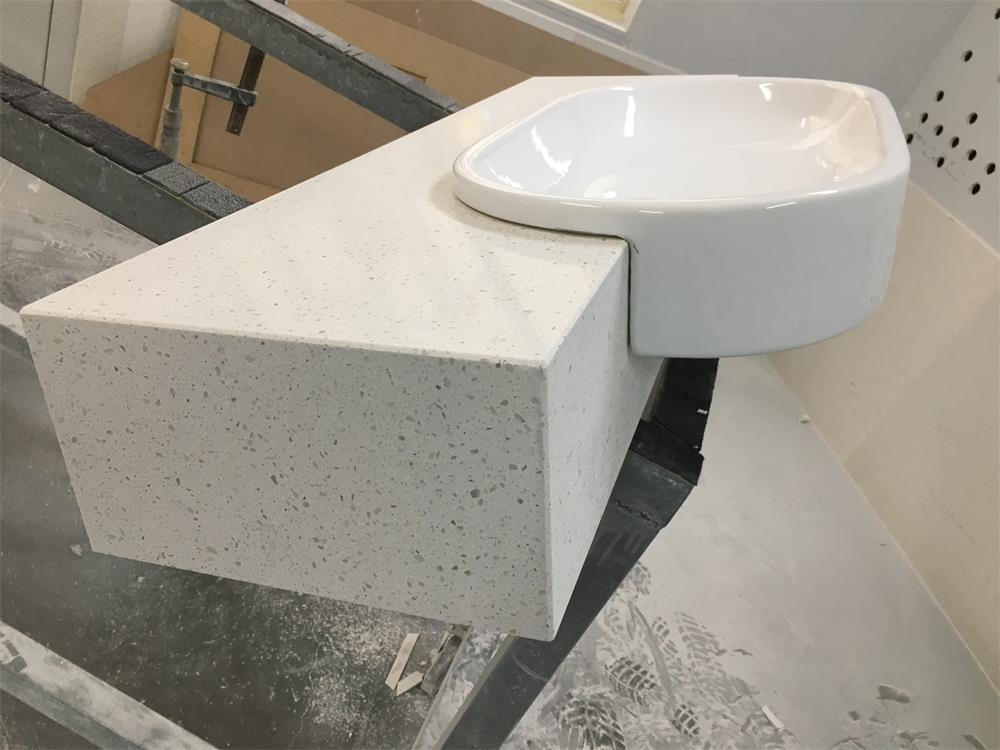
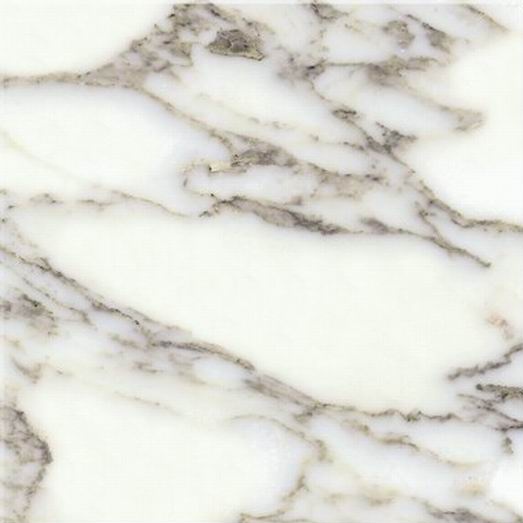
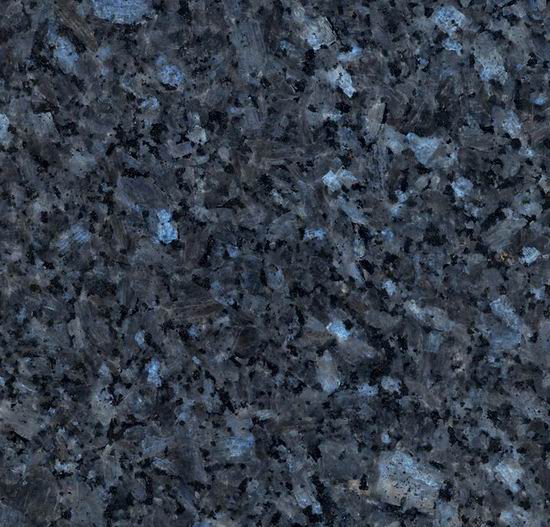
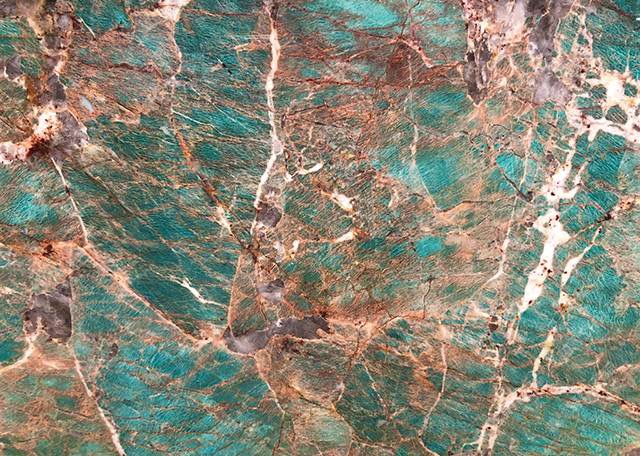









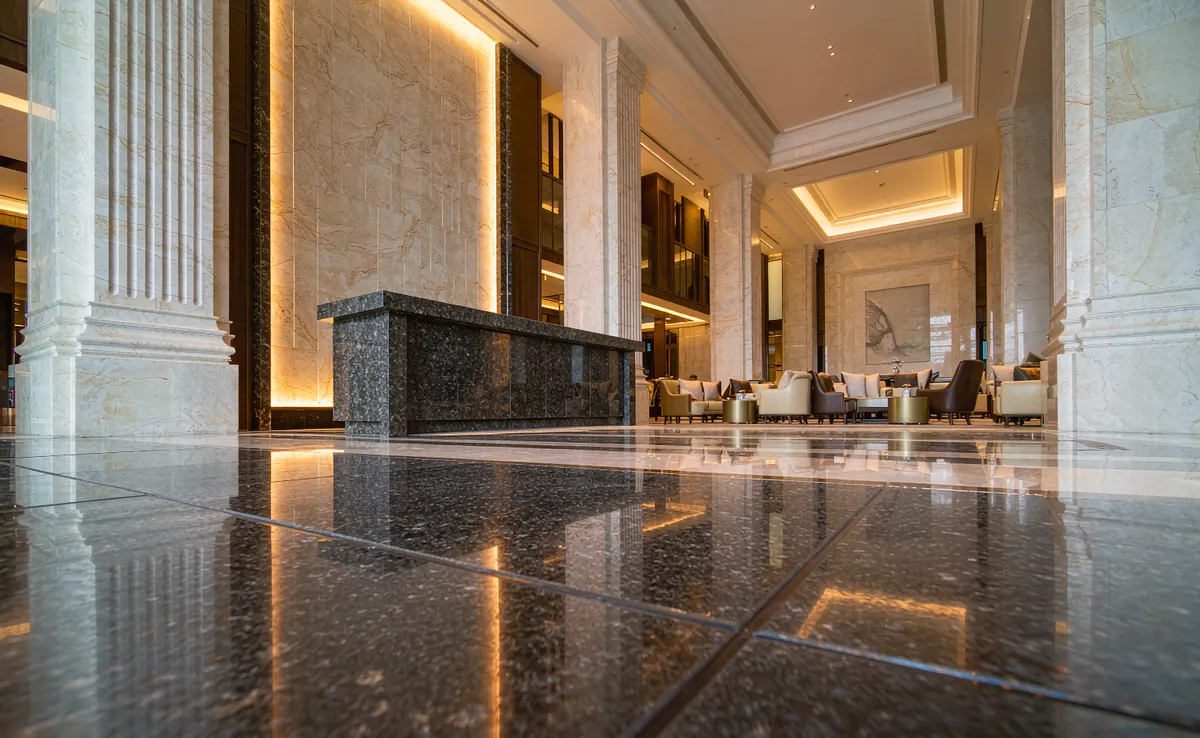
Hotel lobbies, airport concourses, busy family kitchens, exterior plazas — these are the zones where a flooring or countertop material either earns its specification or generates complaint tickets for years. Granite remains the default answer for most of them, and not out of habit. It combines quartz-level scratch resistance with broad availability, a wide price range, and finishing options that let one stone family serve a polished lobby floor and a flame-textured entrance ramp. Yet granite is also a category with real internal variation: absorption rates, grain structures, and flexural strength differ significantly between varieties, and treating "granite" as a single material is how mismatched lots and underperforming floors happen. This guide covers what granite is, where it performs best, and what importers should verify before committing a project to a particular lot.
Granite is an igneous rock formed from slowly cooled magma, composed mainly of quartz, feldspar, and mica. That quartz-rich composition is the source of its reputation: on the Mohs scale, the quartz component sits around 6–7, which means granite resists everyday scratching from grit, shoes, and furniture far better than any carbonate stone. It is also largely acid-resistant — wine, citrus, and most household chemicals that etch marble and limestone leave polished granite unaffected.
What varies between varieties is everything around that quartz skeleton:
The case for granite in lobbies, corridors, and commercial kitchens rests on three properties working together.
Abrasion resistance. Floor wear is driven by grit ground underfoot. On the Mohs scale a polished marble floor starts at roughly 3 and a granite floor at 6–7, so the same foot traffic that produces visible scratch haze on marble within months can leave granite looking even for years. This is the single biggest reason hotel specifiers default to granite in ground-floor public areas.
Low absorption with modest sealing. Dense granite absorbs little water, which limits staining from coffee, wine, and cleaning chemicals and keeps maintenance predictable. An impregnating sealer on a 12–24 month cycle — the same program used on marble — is normally sufficient.
Load and impact tolerance. Granite tolerates the point loads of trolley wheels, luggage, and commercial furniture without the flexural concerns that come with thinner or more brittle materials. For stair treads in public buildings, its combination of hardness and slip-control finishing options makes it a standard specification.
The table below compares the four materials most often shortlisted for hotel floors and working countertops. Figures are typical mineral-scale or category-level values; project decisions should rest on test certificates for the actual lot.
| Factor | Granite | Quartzite | Porcelain | Marble |
|---|---|---|---|---|
| Scratch resistance (Mohs) | ~6–7 | ~6–7 | High (hard body) | ~3 |
| Acid resistance | High | High | Very high | Very low |
| Absorption | Low (varies by lot) | Very low | Very low | Moderate to high |
| Slip-control finishes | Polished, honed, flamed, brushed | Limited by vein structure | Full range (rated tiles) | Polished, honed |
| Large slabs / cut-to-size | Yes, wide range | Yes, costlier | Tile-led, slabs costlier | Yes |
| Exterior suitability | Excellent for most varieties | Good, lot-dependent | Good (frost-rated) | Not recommended |
| Relative cost | Wide range, economical mid-tier | Highest tier | Low to mid | Low to very high |
The practical summary: quartzite matches granite on hardness but costs more and limits finishing options; porcelain performs well but constrains slab sizes and custom cut-to-size work; marble suits low-wear feature zones. Granite is the only one of the four that combines hardness, finishing flexibility, exterior capability, and mid-tier pricing across large quantities — which is why it dominates specification lists for public areas.
One of granite's underused advantages is how differently the same stone behaves depending on finish. The finish decision matters as much as the variety decision:
Note that flamed and brushed finishes open the surface slightly, raising effective absorption and dust retention — those finishes benefit from a stricter sealer cycle than polished stone in the same variety.
Granite's core territory. Specifiers typically pair a polished lobby field tile with flamed stair treads and ramp transitions, keeping one variety across the floor for visual continuity while grading slip performance by zone. Stair detailing — nosing profiles, riser matching, and tread thickness — should be fixed with the factory before production, not improvised on site.
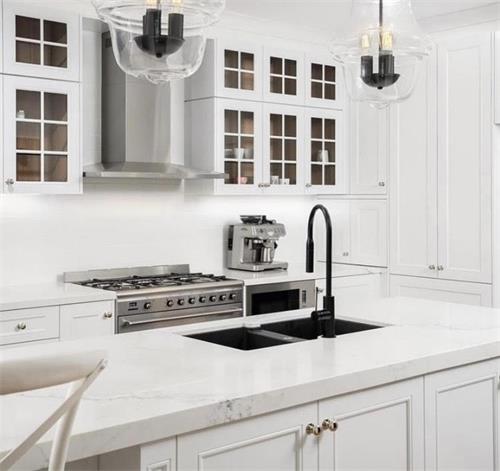
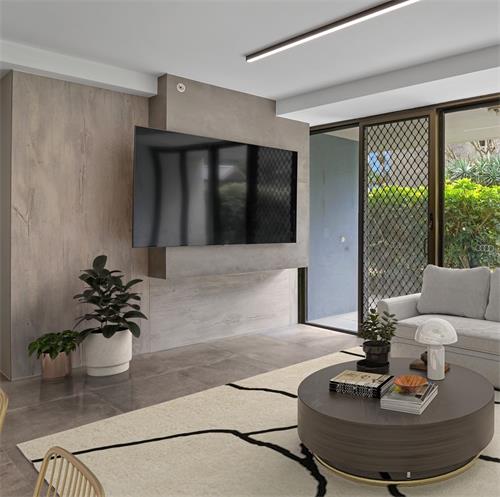
Granite handles hot pans, knife work, and sliding cookware without the trivet discipline marble demands. For hotel pantry counters, buffet stations, and high-volume restaurant bars, granite or quartzite are the realistic carbonate-free options.
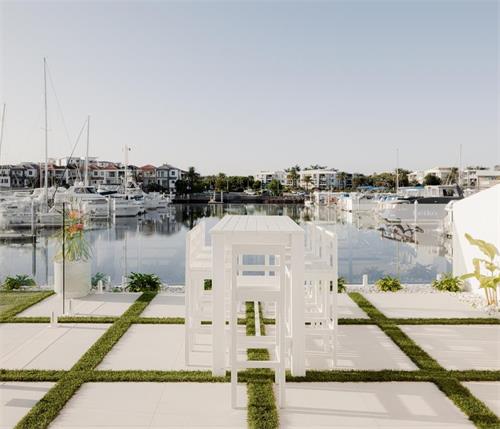
Most export-grade granites are proven exterior performers: UV-stable, frost-tolerant in the densities importers usually specify, and available in the thick cut-to-size formats facades and plazas need. Confirm frost and flexural results (ASTM C97, C880 or the project's governing standard) for the specific lot when the installation is in a freeze-thaw climate.
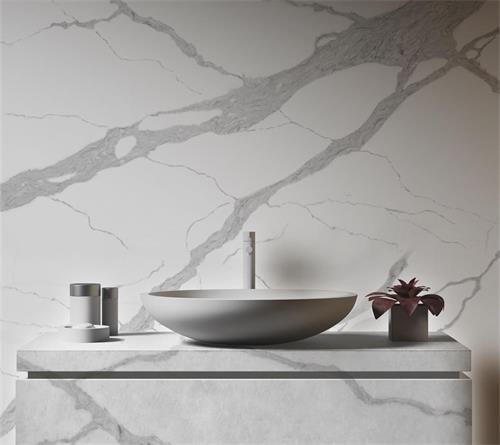
Polished granite still shows oil films on dark varieties in low light, and its speckled pattern reads "commercial" in interiors designed around calm veining. For marble-look feature walls and low-wear vanity tops, marble, dolomite, or onyx remain the better design fit. Specifying granite everywhere "to be safe" is as much an error as specifying marble in a lobby.
Because granite varies internally, experienced importers verify lots the same way they verify any natural stone:
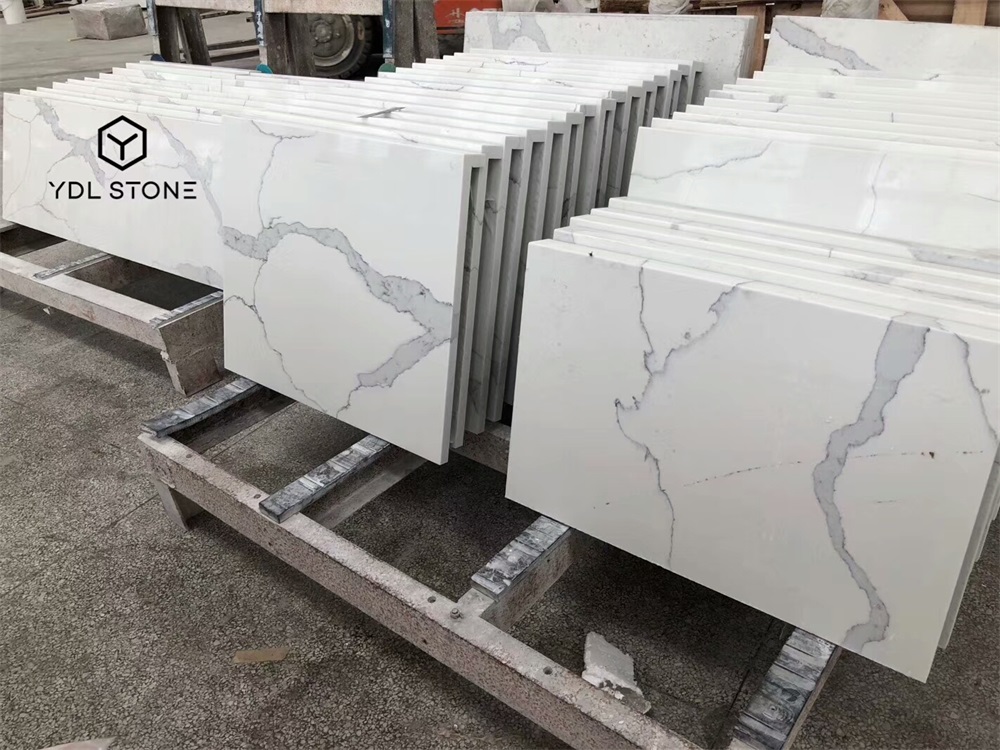
For export shipments, granite tolerates transport better than carbonate stone, but the packing standard does not change: slabs vertical on A-frames, tiles face-to-face in lined crates, and the crating specification written into the purchase order. Pre-shipment inspection should check edge condition after packing and color consistency against approved references.
Granite's maintenance program is the lightest of any natural stone:
Handover should include the cleaning-products list, the sealer schedule, and the approved color references — the documents that keep the floor looking approved in year five.
They are comparable. Both are quartz-bearing stones at roughly Mohs 6–7, so everyday scratch resistance is similar. Quartzite is typically denser and lower-absorption but costs more and offers fewer finishing options; granite offers a far wider variety and price range.
Yes, though less urgently than carbonate stone. A penetrating impregnating sealer on a 12–24 month cycle keeps staining risk low, and flamed or brushed finishes benefit from shorter cycles because their open texture absorbs more.
For most export-grade varieties, yes — granite is the standard natural stone for exterior paving and cladding in cold climates. Confirm density, absorption, and flexural test results for the specific lot, since a few iron-bearing varieties can discolor in wet exterior conditions.
Polished for the main field where reflectivity is wanted, with honed or flamed finishes at transitions, ramps, and stair treads for slip control. Specifying one variety across finishes keeps the floor visually continuous while grading safety by zone.
Unlikely on a sealed, low-absorption lot. Dense granites absorb very little liquid, and prompt wiping handles the rest. Always confirm absorption test results for the actual lot rather than assuming all granites behave identically.
Lot-specific absorption (ASTM C97) and flexural (C880) results for critical uses, bundle photos against approved color references, the written pit-filling policy, thickness and calibration per bundle, and edge condition after crating.
YDL Stone supplies granite, quartzite, marble, dolomite, travertine, and limestone blocks and slabs for hotel and residential projects, with block reservation, lot testing, finish matching by zone, factory QC, and export crating handled in one workflow. If you are specifying granite for a lobby floor, kitchen package, or exterior plaza and want help selecting and verifying the right lot, contact the YDL Stone team for samples and a project quotation.